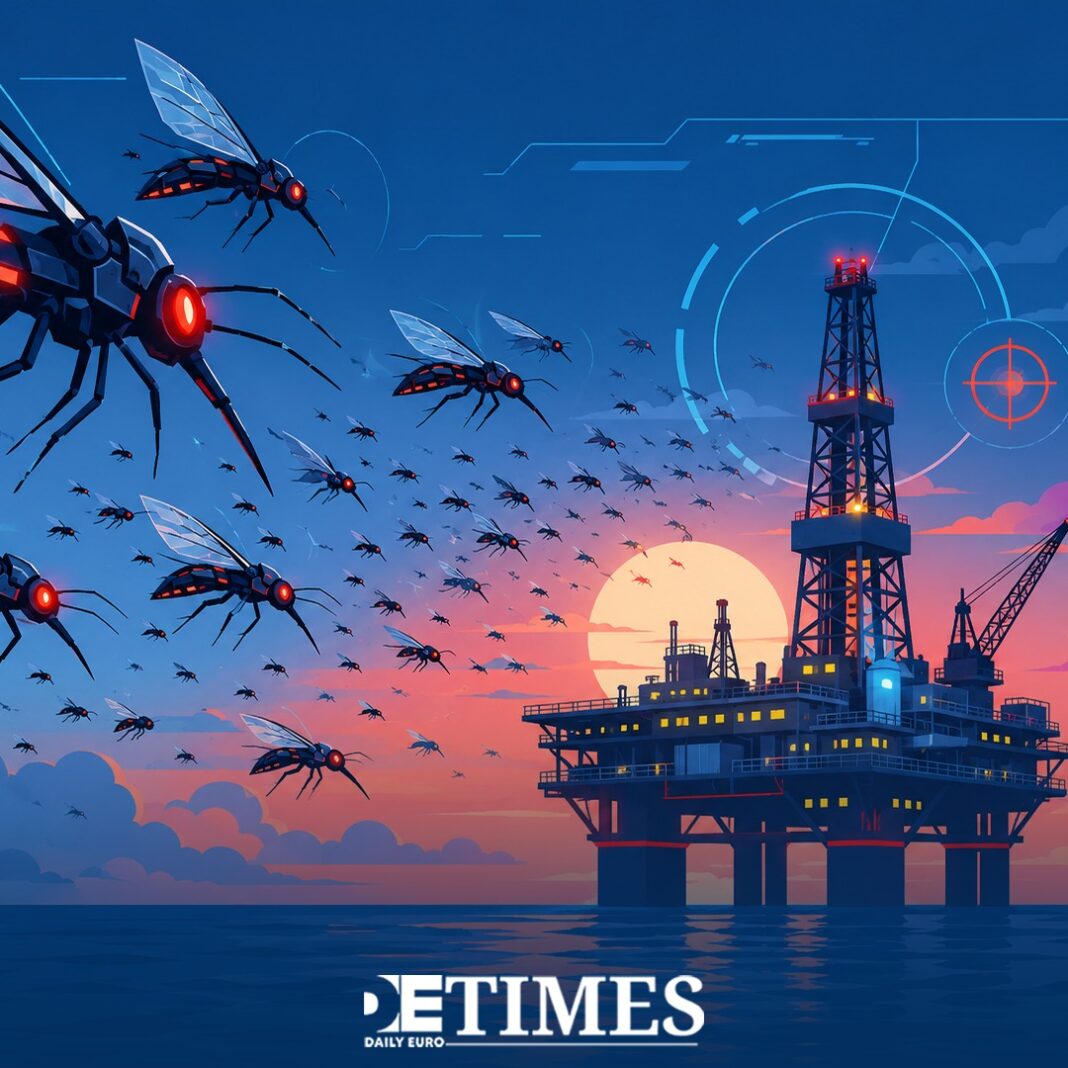
Equinor disclosed an ongoing cyberattack on some of its IT systems on Tuesday, three weeks after Oslo lifted Norway’s national cyber risk rating to its second-highest tier. The company reported output unaffected and data intact. Norway accounted for 31% of EU gas imports last year and 54% of its pipeline gas, according to the European Commission.
The breach puts every utility drawing on those pipelines on notice, even though drilling and compression continue undisturbed. Europe’s most reliable gas supplier still runs on digital networks open to intruders and software faults.
The breach has renewed attention to cyber resilience in Europe’s energy sector, and comparable cyber incidents have struck Norway, Poland and the United States.
Unidentified Attacker
The attacker remains unidentified. Equinor’s public account leaves the suspect list empty and withholds the method of entry, while leaving ransomware and industrial control systems unaddressed.
The company has informed the authorities and says it has mobilised resources to neutralise the attack and restore full integrity of its systems. Norway’s National Security Authority says it stands ready to assist.
In an assessment last month, the authority recorded a threefold rise in successful cyber operations against Norwegian organisations. The assessment left actors unnamed and stopped short of blaming Russia.
Its director added that artificial intelligence lets perpetrators exploit stolen data at a professional level, shortening the interval between a vulnerability and an attack. Possible culprits span criminal gangs, state-linked units and opportunists, but official attribution has yet to be made.
Norway’s Role in Europe’s Gas Imports
Norway holds a position that other suppliers would struggle to fill at short notice. Brussels spent years reducing dependence on Russian pipeline gas, and Oslo has since promised to reopen old North Sea fields and to keep drilling in the Barents Sea.
Surplus hydropower also flows to Europe through cross-border cables, expanding the number of potential entry points for a patient intruder. Analysts say an adversary seeking leverage over European prices would study Equinor closely.
Norway has already confronted this kind of attack. Norwegian security police blamed pro-Russian hackers for opening a floodgate at the Bremanger dam for four hours last year, but Moscow’s embassy in Oslo rejected the claim as politically motivated.
Equinor’s chief executive judged last month that Europe should be “fine” on gas with a mild winter, and he flagged lower storage. Mild weather, however, leaves a determined intruder undeterred.
Poland’s Grid Offers a Precedent
Poland provides the closest European precedent. Last December, wiper malware targeted around 30 energy facilities, and ESET attributed the operation with medium confidence to Sandworm, a unit of Russian military intelligence. Defenders stopped it before any blackout, and Polish officials called it the strongest attack on their energy infrastructure in years.
Equinor’s case differs in scale and visibility. It affected office systems, and investigators have kept Sandworm and other groups outside the frame so far. European energy operators still treat hostile interest as a persistent risk.
Accident and Intent Across the Atlantic
The United States faced a different kind of breakdown last week. A Microsoft 365 outage lasted nearly 24 hours and disrupted users in more than 70 countries. The Federal Aviation Administration ordered a nationwide ground stop as over 12,000 flights were cancelled, and JPMorgan Chase suffered a technical fault on Monday.
Homeland Security treated the incidents as separate events, with trade reporting tracing the failures to botched upgrades and ageing equipment.
Accidental failures in the United States produce the same result as deliberate attacks in Europe: service stops when a few shared systems fail. The root cause is concentration, in one software suite, one air traffic network or one gas operator’s IT estate. Equinor’s case falls between those two scenarios, with an unidentified intruder and a scope still under investigation.
Calls for Stronger Cyber Defences
Brussels has expanded its NIS2 directive until ice-cream producers and chewing-gum wholesalers may fall under it. The paperwork multiplies alerts while leaving the speed of breach isolation to each operator.
Equinor has long said it keeps strict segregation between IT and operational technology, and Tuesday’s undisturbed output supports that claim so far. Some security experts advocate auditing the boundary between office networks and production systems, where a stolen password could lead to a closed valve.
Investigators are expected to take weeks to identify the attacker, and Europe’s gas is expected to keep flowing this winter. Security specialists have called on Equinor and Norwegian authorities to publish the method of entry promptly so other operators can close the same vulnerability.
They recommend investment in segmentation audits, rehearsed manual fallbacks, shared incident reporting between operators and spare capacity in storage and interconnectors. The funding question for such redundancy has yet to be settled ahead of the next outage.
Keep up with Daily Euro Times for more updates
Read also:
Norway Turns Up the Dial on EV Market
‘Theory of Victory’ Hits Diesel Speed Bump
Europe Wades into Another Embattled Chokepoint