

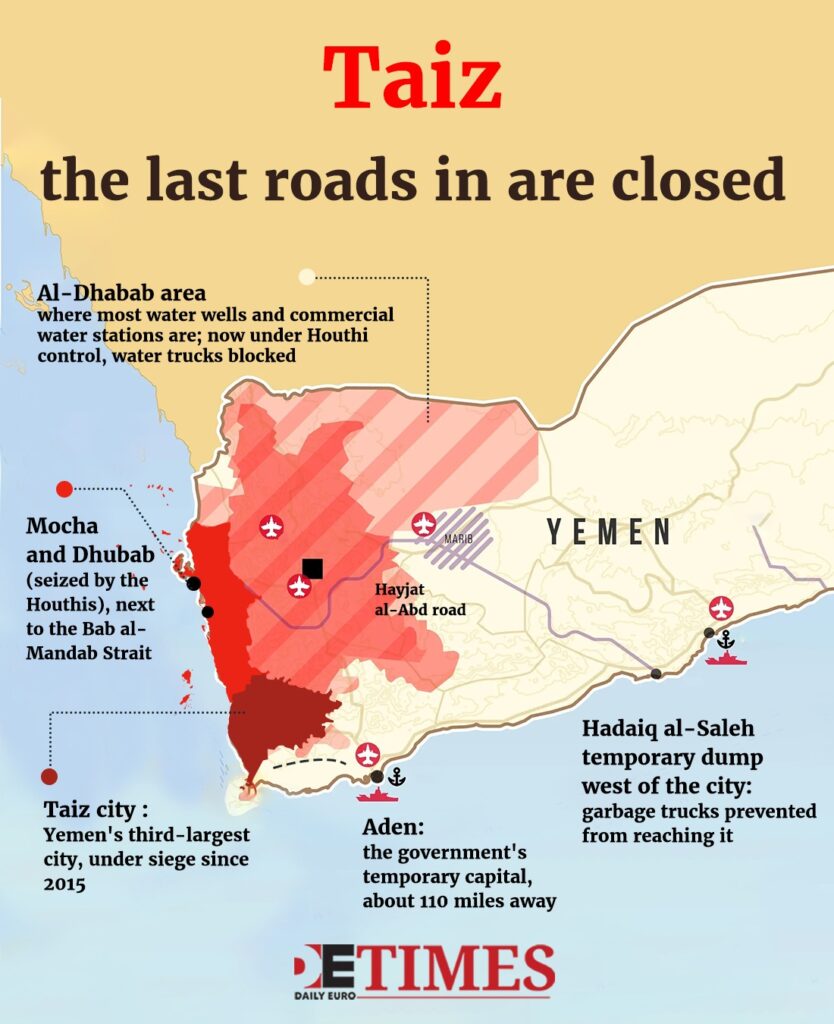
Months after the Houthis’ rapid military advance along the western coast, and their seizure of Mocha and Dhubab, which neighbor the Bab al-Mandab Strait, as well as parts of rural Taiz governorate, the relative calm that followed the UN-brokered truce of 2022 has effectively ended.
With this advance, the Houthis closed the last main access routes to Taiz city, which continues to suffer under the siege imposed on it since 2015, causing the displacement of 330,000 people, according to the United Nations.
Context of Taiz
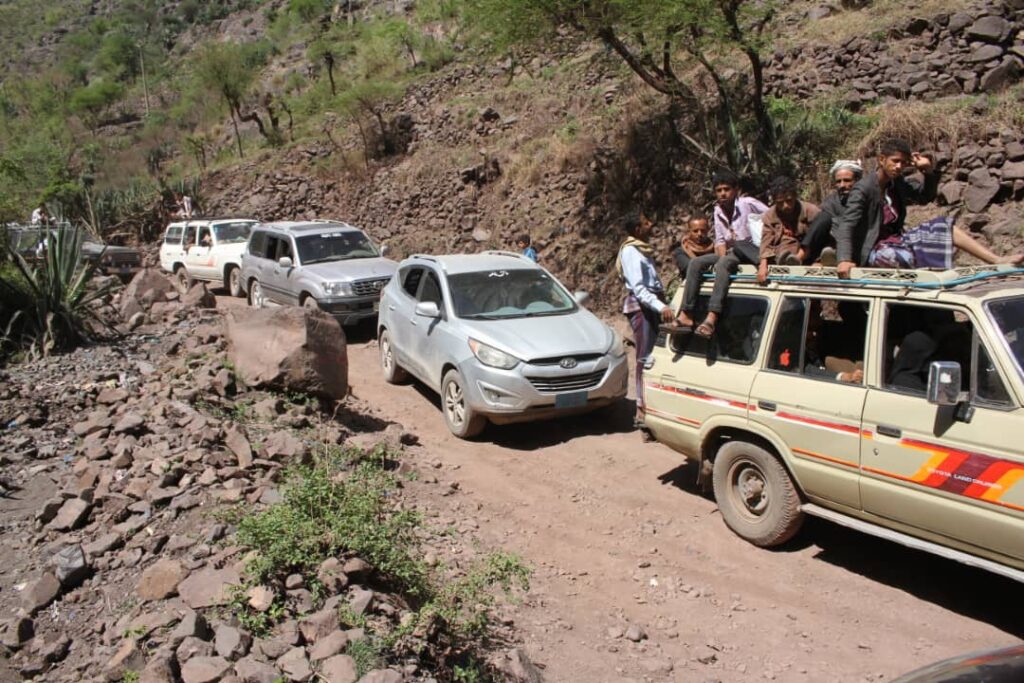
Taiz is Yemen’s third-largest city, strategically located between the country’s south and west, about 110 miles from Aden, the government’s temporary capital. The city depends heavily on land routes to bring in food, fuel, and medical supplies from the coastal and southern areas. But the latest escalation has disrupted these routes, foremost among them the Hayjat al-Abd road, one of the most important commercial and humanitarian corridors to the city.
According to Human Rights Watch, the Houthis used explosives on October 18 to destroy parts of the road, causing major damage.
Testimony
Ali al-Maqtari, a resident, said he is in despair because he has been unable to find albumin medication for his mother since the siege began. She had been displaced into the city to complete her treatment before it was encircled and medicines were blocked.
For Taiz residents, the repercussions of the siege extend beyond the difficulty of obtaining medicine to securing basic needs. Residents, exhausted by years of conflict, say conditions are growing harsher.
Al-Maqtari, 48, said: "We are dying slowly," adding that his income, previously from working as a translator for non-governmental organizations, is no longer enough to support his family and his parents.
WFP insights
On October 14, the UN’s World Food Programme warned that it had been unable to reach “more than 600,000 people in Taiz who depend on humanitarian aid,” because most districts of Taiz are classified at the emergency level of hunger.
UN agencies warned that vital medical facilities face a severe shortage of fuel and oxygen; that wheat and flour supplies could run out in less than three weeks; that food prices have risen by about 50%; and that cooking gas has become largely unavailable.
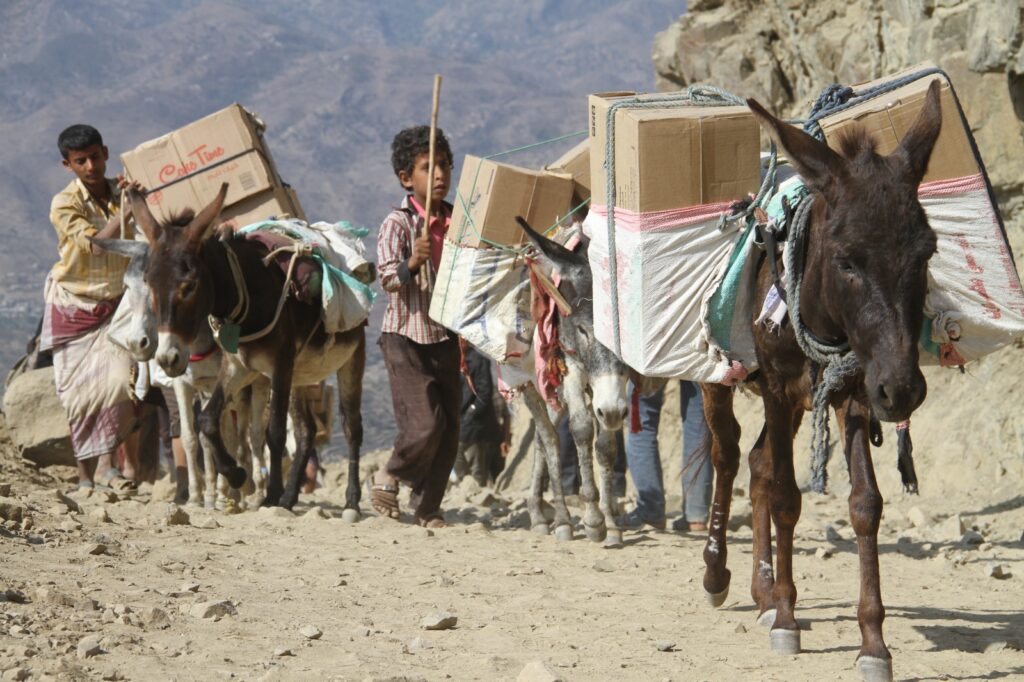
Road closures have increasingly affected local markets, as the siege has led to shortages of basic goods and higher transportation costs and prices. Humanitarian workers reported difficulties obtaining basic goods, including fresh vegetables and fruit.
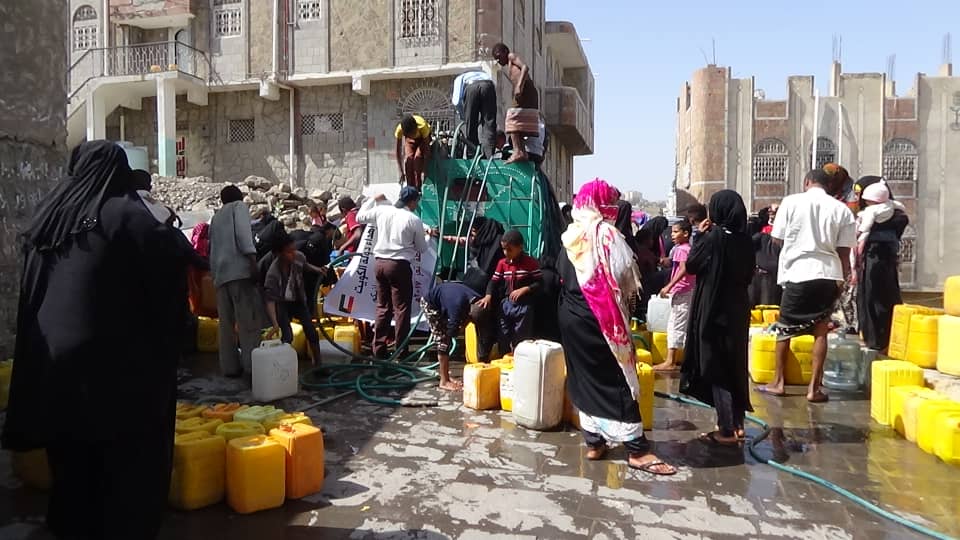
The fuel shortage has also disrupted water supplies. With roads disrupted and fuel hard to obtain, pumping stations can no longer operate regularly, pushing residents to rely more heavily on water transported by tankers, a service that has become more expensive.
The UN Office for the Coordination of Humanitarian Affairs said that water production in the city has fallen by about 50 percent, while the cost of water transported by trucks has risen to about three times its previous level since the latest escalation. UNICEF also indicated that the water pumping systems serving about three million people in Taiz face the risk of shutting down due to the diesel shortage.
In addition, most of the commercial water stations and wells from which water is transported into the city are located in the al-Dhabab area, now under Houthi control, with the Houthis stationed on the main road there, so water trucks cannot easily pass, compounding the difficulty.
The siege has also affected public sanitation.
Saadi Dalla (24), a sanitation worker, says the Houthis prevented garbage trucks from reaching the temporary dump in the Hadaiq al-Saleh area west of the city, causing garbage to pile up in streets and residential neighborhoods. Unable to transport the waste, sanitation workers were forced to burn some of it in the streets, which contributed to clogging drainage and sewage networks and could exacerbate health and environmental risks.
The Houthi siege has severely affected civilian healthcare in Taiz. Doctors and pharmacists reported that road closures and fuel shortages have prevented a number of patients from reaching hospitals and clinics, especially those with cancer, kidney disease, high blood pressure, and other chronic diseases who live outside the city center. The problem is not limited to patients’ access, but also includes a decline in health facilities’ ability to treat those who do reach them.
The Yemeni Ministry of Public Health and Population warned, in a statement issued on 10 October, that medicines, intravenous solutions, medical supplies, and fuel in Taiz’s health facilities were close to running out. It said that if the situation continues, emergency services, surgical operations, intensive care, kidney dialysis, and infant incubators could halt, and that the fuel shortage also threatens electricity generators, ambulances, and the cooling systems used to preserve medicines and vaccines.
Scale of pressure
World Health Organisation data reflect the scale of the pressure. On October 22, the organisation reported that 42 health facilities in Taiz city face a severe shortage of fuel, oxygen, medicines, and medical supplies. More than 1,110 kidney failure patients need dialysis, 192 patients are in intensive care units, and 154 newborns depend on incubators. Hospitals and ambulances need more than 156,000 liters of fuel per month to keep operating.
Human Rights Watch has documented the difficulties faced by patients who need cancer treatment, kidney dialysis, and other essential medical services. In a report published by Reuters on October 26, nurses at the Al-Sweidi Yemeni Maternity and Children’s Hospital said that the fuel shortage forced the hospital to reduce the number of operating incubators from 40 to just 10, amid fears that services will stop if new supplies do not arrive.
Alarming consequences
The consequences are particularly alarming for women and children.
The United Nations Population Fund warned on 16 October that more than 13,100 pregnant women in Taiz city cannot access maternal healthcare services, and that about 1,500 of them were expecting to give birth within the following two weeks. The fund also indicated that only five of 27 facilities designated for emergency maternal and newborn services were operating, and only partially, warning that the shortage of fuel, medical supplies, and specialised staff increases the risks of unsafe births and complications that could lead to the deaths of mothers and children.
Meanwhile, UNICEF revealed that its teams have screened more than 168,000 children in Taiz governorate since the beginning of the year and identified more than 52,000 suffering from acute malnutrition, including more than 11,500 with severe acute malnutrition. This means that about one in every three children screened was malnourished.
Although the organisation said it had pre-positioned about eight thousand cartons of therapeutic food in Taiz, enough for about three months of treatment, it warned that movement restrictions and disrupted supply routes could hinder distribution and children’s access to treatment centers, as well as the later replenishment of stock.
For years, the residents of Taiz lived under shelling and sniper fire and faced severe shortages of food, medicine, and fuel, before government forces drove the Houthis out of the city and reopened the land route to Aden. But the renewed siege puts at stake what the city wrested after years of fighting and suffering. Taiz, which has not yet recovered from its first siege, once again faces the danger of isolation, with closed roads, supplies threatened with interruption, and worsening humanitarian needs.
As these facts unfold on the ground, Houthi media, and those who echo its narrative in the region, continue to portray conditions in the city as normal and not cause for concern.
Keep up with Daily Euro Times for more updates
Read also:
Europe’s AI Factories: Strategic Autonomy or Public Bubble?
Belarusian Spy Network Uncovered in Europe
Water as the New Oil: Europe and Morocco Deepen Cooperation