At first glance, these scenes do not belong together. In Haro, thousands climb a hill on 29 June to drench each other in red wine during La Batalla del Vino, La Rioja’s annual wine battle designated a Fiesta of National Tourist Interest since 1965 and drawing over 10,000 participants this year alone.
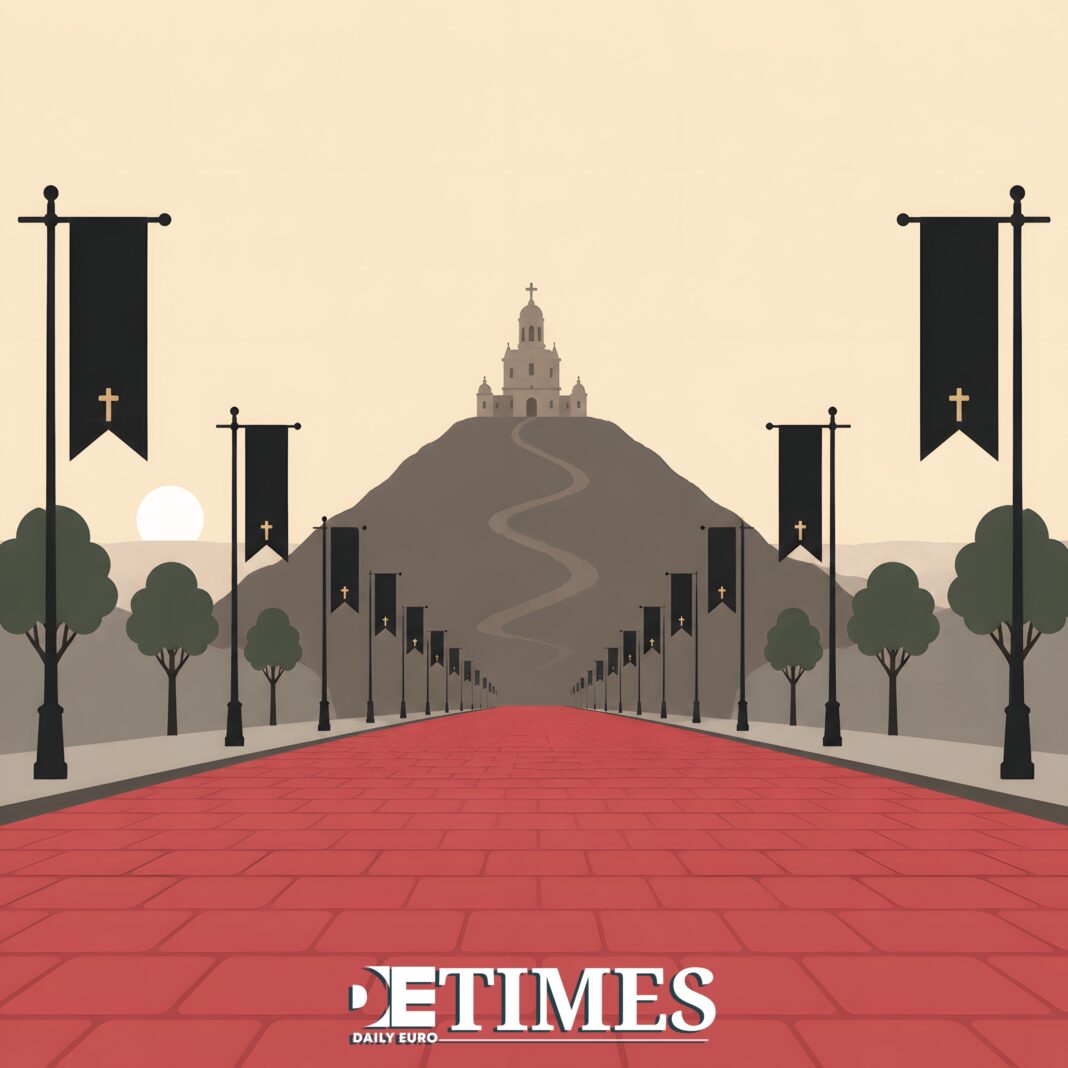
In Tehran, the Iranian state is preparing what it calls the largest funeral in its history for the slain Ayatollah Ali Khamenei, killed on 28 February in a joint US-Israeli airstrike: a six-day procession across five cities beginning on 4 July, with Tehran’s mayor announcing an expected crowd of roughly 20 million. In the United States, Donald Trump is turning the Fourth of July into part patriotic spectacle, part campaign theatre, wrapped in the language of greatness, God and national destiny.
Yet all three point to the same thing. Festivals and mass rituals are no longer just cultural leftovers or local colour. They are among the most important stages on which modern states and societies perform who they are. Some do it through joy, some through mourning, some through patriotism, but in each case ritual turns a crowd into a message.
Haro Shows that Celebration is Never Only Celebration
The wine fight in Haro looks anarchic and cheerful, and it is.
Participants in white clothes climb the Riscos de Bilibio armed with buckets, hoses, spray bottles and traditional leather wine skins called botas, turning the hillside red in a tradition rooted in a 13th-century land dispute between Haro and the neighbouring town of Miranda de Ebro. But even a festival this exuberant is not free of deeper meaning. It is local identity turned physical, the assertion that a place can still define itself through tradition, bodily participation and a shared public script.
In a Europe where many forms of collective belonging feel thinner than they once did, this carries weight. Haro works because it is excessive, communal and rooted. People do not simply attend it; they enter it. Folklore is one of the ways communities keep public emotion alive without having to call it politics: Haro is not ideological in the way Tehran or Washington can be, but it still turns territory, memory and repeated collective action into a form of belonging. Festivals that get dismissed as harmless local colour are often doing exactly that kind of quiet civic work.
Tehran Turns Mourning into State Legitimacy
The Iranian case is more explicit.
Euronews reports that Tehran is organising the six-day procession amid tight security and fragile US-Iran talks over Hormuz, nuclear and sanctions issues, with Khamenei’s son Mojtaba, the new Supreme Leader, barely seen in public since suffering serious injuries in the same strike that killed his father. This is not only an act of mourning. It is a state ritual designed to project continuity, endurance and authority at a moment when the Islamic Republic’s legitimacy faces its greatest test since 1979.
Funerals at this scale are never neutral. They take private grief and convert it into public obedience, historical story and political theatre: the larger the crowd, the stronger the image of legitimacy becomes. The Islamic Republic has always relied on ritual to fuse the religious and political dimensions of power. Processions, martyrdom, funerals and commemorations are not decorative additions to authority; they are part of how authority is made visible and believable.
At a moment of succession anxiety and regional tension, that visibility becomes even more urgent.
Trump’s July 4 Works the Same Logic
Trump’s Fourth of July may look less solemn than Tehran’s funeral and less rooted than Haro’s festival, but it follows a similar logic. Six “Freedom Trucks” — double-wide 18-wheeler mobile museums created by Hillsdale College and PragerU — have fanned out across 48 states, aiming to reach 20 million Americans with a version of national history in which an AI-generated George Washington proclaims “Thy rights are a gift from God” beneath a ceiling reading “In God We Trust.”
A White House statement said 2026 would feature “a renewal of patriotism and national pride.” Historians have noted that the American Revolution had little to do with religion, and that the Founding Fathers deliberately avoided establishing a national faith, but the exhibit does not invite that kind of nuance.
This is where ritual in democratic politics starts to look more like branding, but the emotional structure is the same. The point is to turn nationhood into a lived scene: flags, trucks, speeches, sacred language, founding myths. Trump understands that politics is not won only through policy or grievance; it is won through atmosphere. The wartime context sharpens that logic further. A patriotic holiday during tension with Iran and amid wider global conflict cannot avoid taking on a harder edge.
Celebration becomes assertion, and national ritual becomes a way of claiming steadiness, righteousness and historical mission at the exact moment when the present feels unstable.
Ritual is Where Power Looks Most Human
What links Haro, Tehran and Trump’s America is that all three understand something modern politics often forgets.
People do not live by policy alone; they live by repeated acts of gathering, memory and symbolic participation. Ritual gives abstraction a body. It tells people not just what their nation, town or faith believes, but what it feels like to belong inside it. That is why public festivals carry more political and cultural weight than they are usually credited with: they are often where politics and religion become most emotionally legible, not in spite of the spectacle but because of it.
In an age of fragmented media and thinning institutions, that mechanism may be growing stronger rather than fading. Haro offers joy, Tehran offers sanctified mourning, Trump offers patriotic myth. Different moods, same mechanism. From wine-soaked La Rioja to black-clad Tehran to flag-draped America, festivals remain one of the clearest places where power learns to speak in human form, and in 2026, all three are happening in the same week.
Keep up with Daily Euro Times for more updates
Read also:
Iran and Lebanon Bind Their Fates Again
Sagrada Família Nears Completion, Homes face Demolition
Trump’s Peace Push Serves the 2028 Republican Succession