
Donald Trump virtually signed a ceasefire agreement with Iran on Monday, lifting the American naval blockade of Iranian ports and promising that the Strait of Hormuz would reopen within days. The deal follows three and a half months of war that idled oil tankers, rattled global markets and left Tehran isolated.
Vice President JD Vance signed alongside him, while Iran’s parliament speaker, Mohammad Bagher Ghalibaf, put his name to the agreement for the Iranian side, opening a sixty-day window for nuclear talks and the return of international inspectors.
Two days later, Donald Trump arrived at the Group of Seven summit in Evian-les-Bains, France, treating the agreement as proof that his diplomacy works and predicting that Iran would soon be “back in the rearview mirror.”
With the Twenty-Second Amendment barring Donald Trump from a third term, every foreign policy outcome he produces now becomes raw material for the 2028 campaign his chosen successor will have to run in his place.
The Strait Reopens, The Agenda Shifts
The ceasefire with Iran cleared space at the summit for a subject the American delegation had let drift, the war in Ukraine. Allied officials spent the opening sessions pushing Ukraine back atop Donald Trump’s agenda after months in which the Iran conflict had consumed most of his attention.
Volodymyr Zelenskyy met Donald Trump on Tuesday, and Donald Trump called the exchange a “very good meeting” before vowing to do everything he could to push Russia toward a deal. The British government used the same week to announce fresh sanctions on the tanker fleet Russia relies on to evade Western restrictions, and a Russian strike on Kyiv damaged a historic cathedral hours before the summit opened.
Ursula von der Leyen, president of the European Commission, argued that Russia’s fatigue is now visible and called on partners to increase their support further.
None of these developments needed Donald Trump’s intervention to occur, yet each gave him an opening to claim credit for momentum that originated elsewhere.
Evian Sets the Stage For Succession
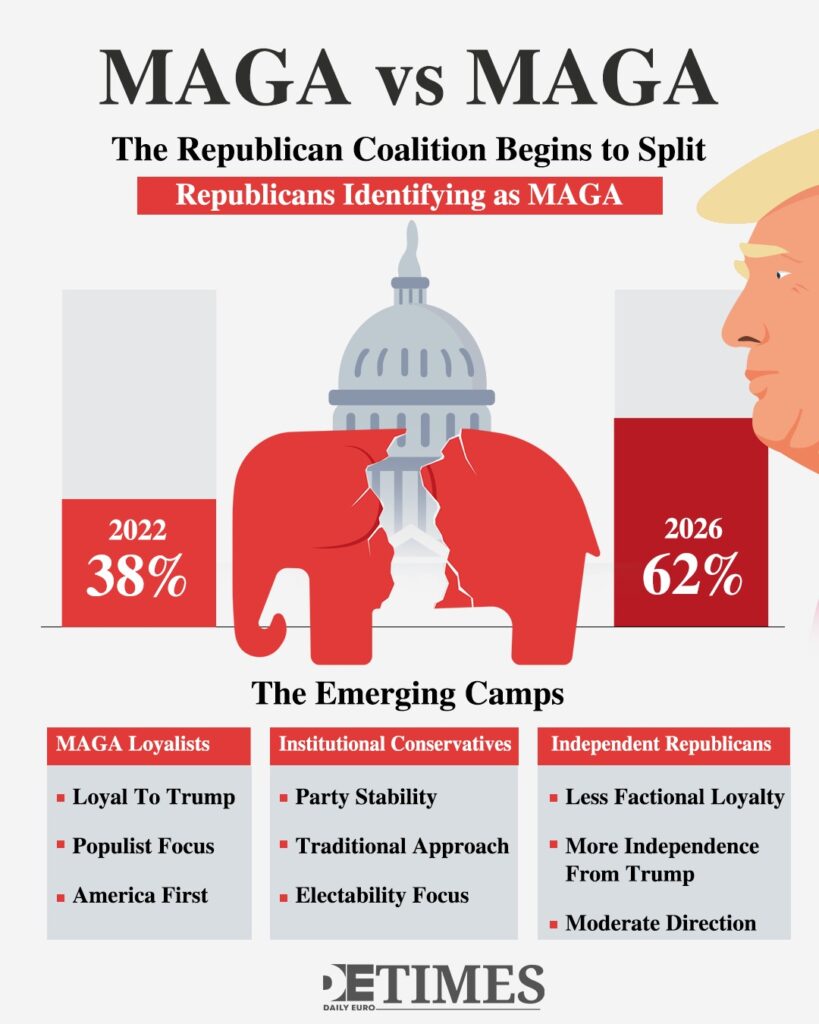
The same gathering that revived the Ukraine question also revived a quieter contest inside Donald Trump’s own party. JD Vance and Marco Rubio have spent the Iran war positioning themselves as Donald Trump’s likely heirs.
Vance has taken a cautious line on military entanglement, while Rubio has aligned himself closely with the administration’s hawkish posture.
Trump has already called Vance “most likely” to inherit the Republican nomination in 2028, and has suggested Vance and Rubio could run together on a single ticket.
Prediction markets give Vance a clear lead over Rubio, and sympathetic commentators, including the broadcaster Tucker Carlson, argue that Vance alone can extend Donald Trump’s legacy.
A clean exit from the Iran war and a credible claim to having pushed Russia toward peace would hand Vance precisely the record his allies want him to campaign on.
Tariffs Return Once Iran Recedes
Even as Donald Trump claims credit for ending one conflict, he has revived a trade dispute of his own making. Tariffs barely featured in his public statements while the Iran war dominated headlines.
Within days of the ceasefire, Donald Trump threatened France with a full tariff on wine unless President Emmanuel Macron dropped a digital services tax aimed at American technology companies.
The threat comes at a summit already strained by Donald Trump’s repeated questioning of North Atlantic Treaty Organization commitments. His earlier ambitions toward Greenland unsettled Denmark and several other allies this year.
Macron, hosting the summit at Evian-les-Bains, has tried to keep discussion centred on inequality and cooperation, priorities that sit awkwardly beside an American agenda built around leverage and deals.
A Legacy Measured In Deals
Each of these threads points toward the same destination. Donald Trump cannot appear on a ballot again, so the deals he signs now exist to build a record his successor can carry into 2028.
Steven Cook of the Council on Foreign Relations has cautioned that the unresolved details, particularly Iran’s nuclear programme, will require extensive and difficult negotiation. A similar caution applies to Ukraine, where Russia has shown no sign of accepting a ceasefire on Western terms.
The realistic outlook is a presidency that keeps producing announcements faster than it produces settlements, leaving JD Vance or Marco Rubio to inherit unfinished business dressed up as victory. What happens after the cameras leave Evian-les-Bains will decide whether voters in 2028 read this record as strength or as a debt still owed.
Keep up with Daily Euro Times for more updates
Read also:
Trump’s Iran Whiplash: Oil Markets and Public Sentiment
Trump, Xi, and the Hong Kong Link
Populists Collide: Behind the Meloni-Trump Feud