
Last week, United States Vice President JD Vance publicly took to task Israeli cabinet ministers who had criticised Washington’s peace accord with Iran.
Vance warned the ministers that American weapons they leant on “have been built by American hands and paid for by American tax dollars.” He told reporters that “Donald J. Trump is the only head of state in the entire world who is sympathetic to the nation of Israel at this moment in time.”
The dispute occurred one day after Donald Trump and Iranian President Masoud Pezeshkian signed a memorandum of understanding, or MoU, setting a 60-day framework for nuclear negotiations. The MoU reopened the Strait of Hormuz to commercial shipping, lifted the US naval blockade of Iranian ports, and ended nearly four months of war.
The accord left Iran’s ballistic missile programme and its network of regional partners outside its scope.
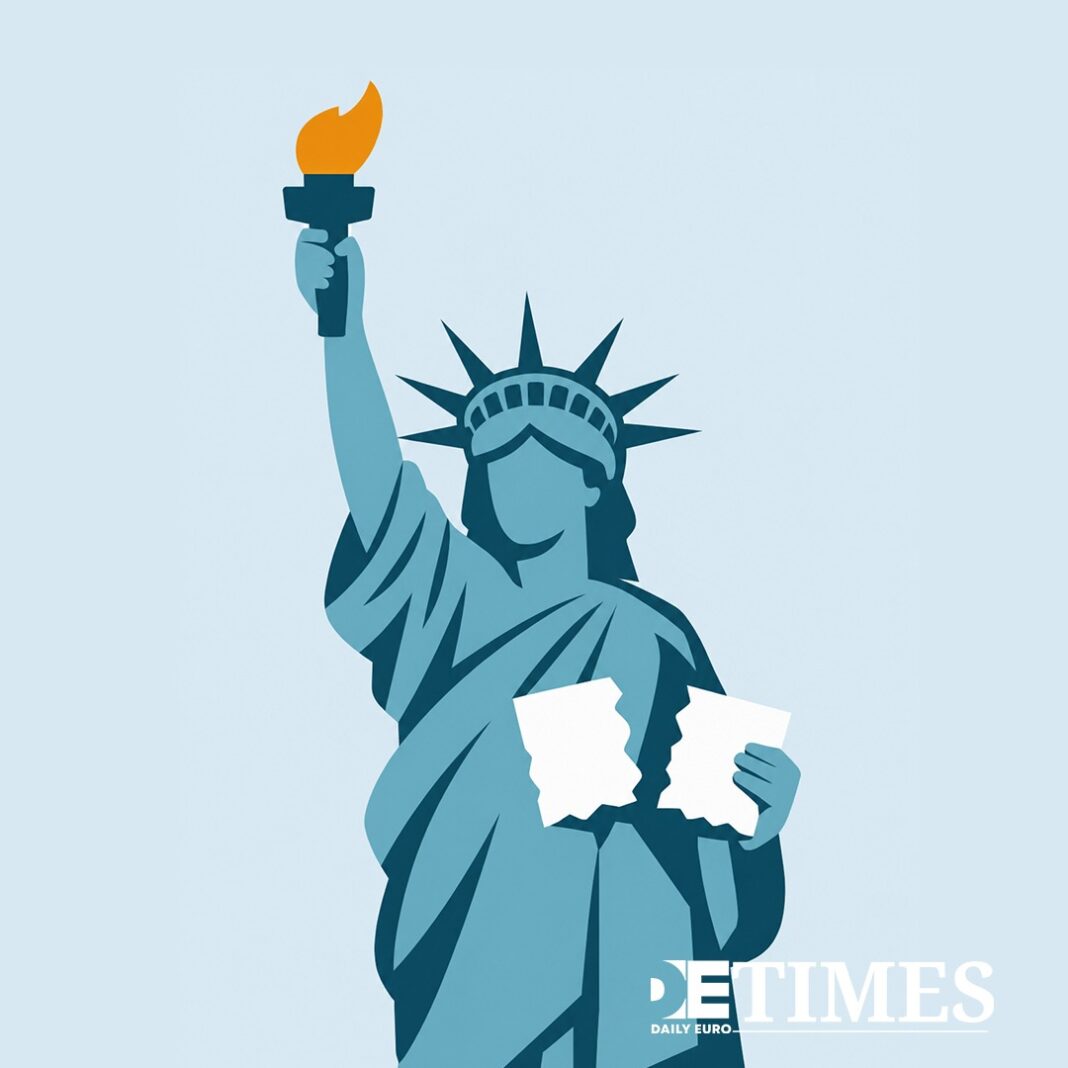
Among Washington’s partners, the deal produced fractures with a contour already established by Ukraine. Iran had become the second conflict to run America First doctrine through the institutions of Western alliances.
Once Gratitude Becomes Policy
Vance’s tone towards Israel carried a recent precedent. Last year, Vance demanded that Ukrainian President Volodymyr Zelensky “just say thank you” during a combative Oval Office meeting that ended with the Ukrainian delegation ordered to leave.
The incident laid bare a recurring theme in America First diplomacy. If allied leaders contested US-defined terms for ending a conflict, Vance reframed the partnership itself as a meritorious transaction.
Towards Israel, Vance applied the same register. He told the New York Times that Israeli ministers Bezalel Smotrich and Itamar Ben-Gvir had entered a “weird panic” over a deal Vance himself had helped negotiate.
“You can’t just kill your way out of solving every single national security problem that you have,” Vance told the newspaper.
The framing repositioned Israel as a client of American power. Washington still pledged ongoing support, but support was now delivered with a visible invoice.
The EU’s Own Fault Line
The same pressure that tested Washington’s alliance with Israel simultaneously uncovered a parallel division within Western diplomacy.
On 18 June, Israeli Foreign Minister Gideon Saar severed all contact with European Union High Representative for Foreign Affairs Kaja Kallas. Saar cited reports that Kallas had privately compared Israeli policies in Gaza and the West Bank to South Africa’s apartheid-era system during a visit to Mexico in May.
Kallas declined to deny the comparison, stating only that “dialogue is the foundation of diplomacy, especially when differences arise.” Saar called her silence a “blood libel” and demanded a retraction.
The dispute erupted as EU leaders gathered in Brussels for a European Council summit, and the bloc convened divided.
Germany’s Chancellor Friedrich Merz distanced himself from the analogy attributed to Kallas. Ireland’s Prime Minister Micheal Martin called Saar’s decision “unacceptable” and asserted the EU’s inability to take stronger action had damaged the bloc’s credibility.
At a more fundamental level, 20 of the EU’s 27 member states had already asked the EC to propose trade restrictions targeting Israeli settlements in the occupied West Bank. Germany and Italy had helped block the measure. The Kallas-Saar rupture turned that internal disagreement into a public clash.
Rome’s Red Line
Italy manifested a corresponding fracture at the bilateral level. Giorgia Meloni had sought to position herself as Italy’s bridge between Europe and the Gulf region, a role that long justified her closeness to Donald Trump. The arrangement broke apart over Iran.
Meloni refused to back the US-led military campaign, and her government denied American forces access to the Sigonella air base in Sicily. Trump returned to the refusal after the Group of Seven, or G7, summit in Evian-les-Bains, France, concluded last week.
In an interview with Italian broadcaster La7, Trump claimed Meloni had “begged” him for a photograph at the summit, saying he agreed only because he “felt sorry for her.”
Meloni rejected the account as “completely fabricated” in a sharply worded public response. “I don’t know why the president of the United States behaves this way with his own allies,” Meloni wrote on social media.
Italian Foreign Minister Antonio Tajani immediately cancelled a scheduled visit to Washington, calling Trump’s comments “serious and offensive” towards all of Italy.
Meloni told viewers she regretted that Trump afforded more accommodation towards adversaries than towards his own partners. The remark resonated with force precisely because she had spent years trying to prevent it from becoming accurate.
No Alliance Without a Price
The takeaway all three ruptures share pertains to the price of applying America First as an operating principle for Western alliances. Ukraine had showcased the framework’s application to continental Europe. Iran transposed the same framework to the Middle East and to the EU’s internal policy coherence.
Washington has treated its partnerships as bilateral balance sheets, demanding open displays of compliance before support flows.
The 60-day MoU negotiation now under way in Switzerland grapples with a serious obstacle, with Israeli military operations in Lebanon repeatedly threatening the ceasefire the accord hinges on.
A collapse would compound the diplomatic ruptures with a military return to conflict. Western solidarity has rarely materialised naturally; it has always entailed sustained investment by all parties.
For now, the preconditions for that investment look harder to assemble than at any point since the end of the Cold War.
Keep up with Daily Euro Times for more updates
Read also:
West Overlooks Russian Grain and Borders in Ukraine
Gulf War Dismantles the West’s Russia Sanctions Regime
AfDB Turns to Gulf as Western Funders Step Back

