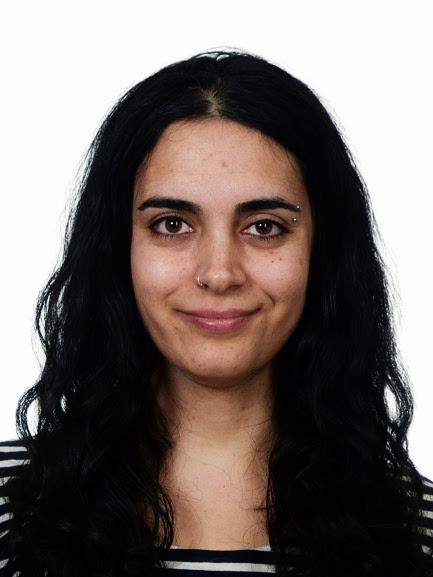

On Wednesday, the International Affairs Office at the UAE Presidential Court launched “Zayed,” a remarkably lifelike AI-powered spokesman designed to communicate the office’s initiatives, strategic priorities, and international engagements across digital platforms.
Mariam bint Mohammed Almheiri, who heads the office, said the initiative reflects “a clear vision set by our leadership, a vision that sees innovation not simply as technological advancement, but as a force that empowers societies and strengthens human connection.” The launch comes weeks after the UAE rolled out its first wave of AI agents for government services and sits inside the UAE Strategy for Artificial Intelligence 2031, which aims to position the country as a global hub for AI-powered governance. In 2023, a Kuwaiti media outlet introduced a virtual AI news presenter; Zayed takes that regional experiment and elevates it to the level of presidential communication.
The launch fits a familiar Emirati pattern. The UAE has spent years treating artificial intelligence not only as an economic sector but as a language of state identity. A government does not create an AI spokesman merely to save time. It does so because it likes what the format represents: precision, polish, scalability, and a voice that can be endlessly replicated without strain or deviation.
A State Voice Without Human Friction
Zayed is being presented as a communications instrument, not a policymaker.
Even so, the symbolism is hard to miss. A spokesman is usually a political body: someone who absorbs pressure, answers awkward questions, and embodies the line between public explanation and institutional defensiveness. Replacing that role with a synthetic figure changes the emotional terms of communication, even if the words remain state-approved.
That may be exactly the appeal. An AI spokesman does not stumble, age, contradict itself, or reveal too much through tone. It offers a cleaner form of public speech, one that fits the UAE’s wider administrative style, in which futuristic presentation and executive discipline tend to reinforce one another. The more seamless the official voice becomes, the less visible the human negotiation behind it.
Efficiency Rises, Accountability Becomes Diffuse
There is no reason to dismiss the technology itself. The UAE has been serious about AI for years, from cybersecurity and digital government to state-backed infrastructure projects. Zayed is a logical extension of an existing political culture rather than a gimmick. But official AI raises a harder question about accountability. A human spokesman can be challenged as a person, judged for evasiveness, or forced into some recognisable form of public discomfort.
An AI figure flattens that encounter. It makes state communication more present and less human at the same time. Efficiency increases. The person responsible for what the spokesperson says becomes harder to identify, which is a political condition as well as a technical one.
The Future Sounds Very Curated
The UAE is not only experimenting with new tools. It is rehearsing a model of state speech in which authority appears modern, friendly, and almost frictionless. For a country that positions itself as technologically ambitious and administratively ahead of the curve, that is a powerful image. Zayed may help the UAE project confidence and digital sophistication to audiences across generations, exactly as Almheiri described.
He also hints at a future in which the state speaks more often through synthetic certainty than through fallible people. That may be efficient. It is not politically neutral. The question is not whether AI can communicate state priorities clearly. It already can. The question is what gets lost when official communication becomes so perfectly curated that no one can tell where the institution ends and the algorithm begins.
Keep up with Daily Euro Times for more updates
Read also:
Airports as Warning Signs, Theory into Practise
UAE Quits OPEC to Define New Energy Order
Lost in Automation: AI Predictions and the Reality Check