

Within ten minutes of launching, TeaOnHer exposed users’ personal data and driving licences through basic programming flaws. Meanwhile, Polish officials stopped Russian hackers “at the last minute” from compromising a major city’s water supply.
Yet amidst these digital disasters, European policymakers push ahead with mandatory online identity verification systems launching in 2026.
When Apps Turn Personal Data Into Public Record
The Tea app catastrophe revealed drivers’ licences, messages, and uploaded photos through what experts called “major security failures” rather than sophisticated hacking.
TeaOnHer, the male copycat version, leaked identical information within hours. The leaked photos now appear on rating websites and harassment maps.
These weren’t isolated incidents. Both apps required government-issued identification for verification: precisely what European digital identity systems will mandate across platforms.
Cyber Warfare Meets Everyday Infrastructure
Russian hackers target water and wastewater systems as favoured infrastructure weapons. Poland alone faces roughly 300 such attacks daily according to government ministers.
The recent water system attack wasn’t an anomaly. Russian military intelligence tripled its sabotage operations between 2023 and 2024 across European targets.
Digital Wallets Become Digital Targets
European Commission officials envision a “personal digital wallet for every EU citizen” to access both public and private services. The European Digital Identity Regulation aims to create “universal, trustworthy, and secure” digital identities.
Trustworthy and secure sound appealing until apps leak your driving licence to strangers. Universal becomes problematic when state actors wage digital warfare against civilian infrastructure.
Consider the mathematics of risk. If TeaOnHer leaked data within ten minutes and faces over ten lawsuits, what happens when mandatory digital verification affects every European citizen? Criminal networks and hostile governments don’t need to hack water systems when they can harvest identity documents from poorly secured apps.
Privacy advocates and security experts warn about surveillance overreach and technical vulnerabilities. Meanwhile, five EU countries prepare to test age verification apps despite these concerns.
Rethinking Digital Security in Wartime
Rather than mandating digital identity systems during active cyber warfare, European policymakers might consider distributed verification methods that don’t create single points of failure. Anonymous credential systems exist that verify age or eligibility without storing personal documents.
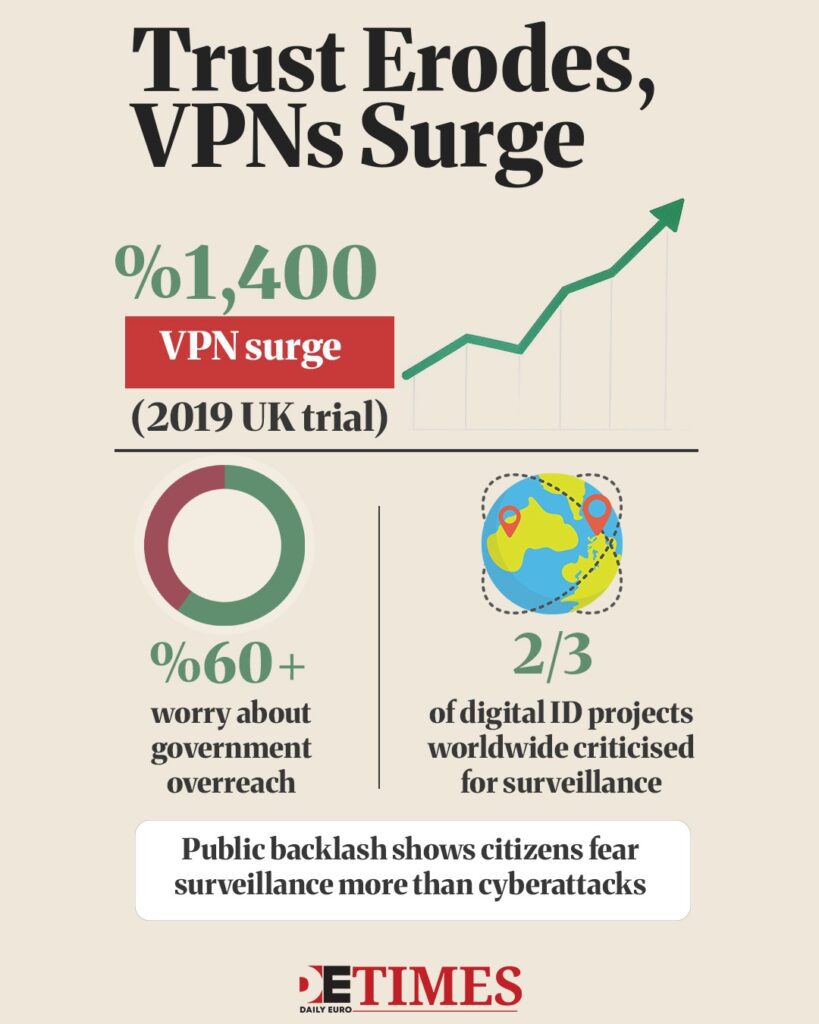
The UK's age verification rollout sparked a 1,400% surge in virtual private network usage, suggesting citizens already seek alternatives to digital identification requirements.
Small startups leak government IDs through basic coding errors. Water treatment facilities become battlegrounds for foreign intelligence services. Why would Europe bet citizen safety on digital systems when analogue alternatives remain viable?
Keep up with Daily Euro Times for more updates!
Read also:
Palantir’s European Expansion: Tech Dependence Wrapped in Security
The AI Talent Diaspora America Ignored
Chinese Disinformation Campaign on Spanish Government

