

Argentina has threatened Sam Moody, chief executive of Rockhopper Exploration, and the company’s finance chief with prosecution, fines and imprisonment over the Sea Lion project off the Falkland Islands. Britain filed the warning as a witness statement before hearings in Hamburg.
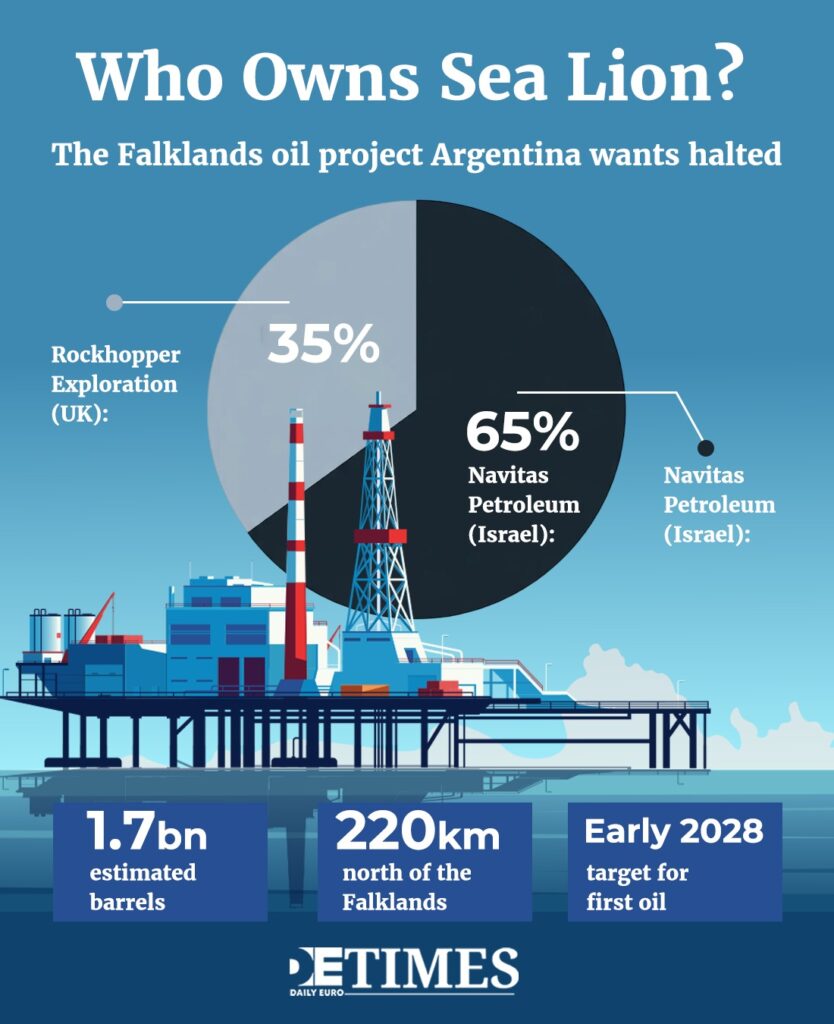
Sea Lion lies about 220 kilometres north of the islands, holds an estimated 1.7 billion barrels and targets first oil in early 2028. Navitas Petroleum of Israel holds 65% and Britain’s Rockhopper holds 35%. Buenos Aires, which calls the islands the Malvinas, wants the International Tribunal for the Law of the Sea in Hamburg to order drilling suspended during a wider dispute.
Argentina’s legal case is weak, but its financial pressure is significant. Experts expect the Hamburg order, due on 28 November, to settle little about sovereignty. The threats against executives, banks and contractors are likely to keep working in boardrooms long afterwards.
Prison Threats as Financial Pressure
Criminal warnings succeed when they alter a lender’s judgment. Moody’s statement lists a wider campaign. Argentina banned Navitas from operating in the country for 20 years. Officials reportedly wrote to Standard Chartered, which has a branch in Port Stanley. The American contractor Halliburton then said it would stay away from Sea Lion after talks with Argentina.
President Javier Milei announced decrees in September to sanction firms involved in the project and pledged a naval base in Tierra del Fuego. Companies tied to Sea Lion could lose access to Argentine business, including the vast Vaca Muerta shale formation.
Peter Clarke, an operations administrator at the Royal United Services Institute, calls the criminal threat “A fairly low-risk but high-reward strategy.” Small oil companies hold few assets Argentina must protect, so it can apply pressure at low risk of military escalation.
Clarke adds Milei’s rhetoric targets voters at home, where his government has lost popularity since May. Veterans of the 1982 war and the left-wing opposition criticised his earlier praise of Margaret Thatcher, which gives him every incentive to sound uncompromising on the islands.
What the Hamburg Tribunal Can Order
Hamburg hosts the courtroom half of the campaign. The tribunal finished two days of hearings last week and plans to rule on 28 November on provisional measures only. Its order can grant Argentina’s request, impose partial restrictions or reject it entirely.
Any measures ordered bind the parties, but the tribunal has no independent means of enforcement, so compliance stays voluntary in practice.
Marcelo Kohen, an Argentine jurist, contends the tribunal need not settle sovereignty to protect Argentine rights in the interim. Britain argued Argentina failed to prove urgency, since drilling begins no earlier than March next year. Its attorney general, Ellie Reeves, warned suspension could deprive islanders of billions of pounds.
Sea Lion would double the islands’ GDP and generate £8 billion for their government over its life, according to Britain’s estimates. A 2015 arbitration over the Chagos Islands declined to rule on a sovereignty dispute seeking a law-of-the-sea label, a precedent Britain’s lawyers will welcome.
Three Plausible Outcomes After Hamburg
Whatever the order says, the outcomes sort into three broad cases. Rejection is plausibly the likeliest, given Britain’s point on urgency and the tribunal’s caution on sovereignty. Argentina would keep its criminal and financial route, and every threatened executive and contractor would keep weighing the risk.
A partial order, perhaps imposing environmental safeguards or pausing production infrastructure until the wider arbitration forms, would hand Argentina a diplomatic win and lenders a reason to wait.
A full suspension looks least probable, and Britain has announced plans to shield companies from extraterritorial Argentine measures. The downside case lies in Washington, where a formal call for sovereignty talks, or advice to American firms and banks to avoid Sea Lion, would tighten the squeeze decisively. Rachel Utley of the University of Leeds judges the prospect of Washington using the islands as leverage over Britain a live one.
Keep up with Daily Euro Times for more updates
Read also:
Pope Leo’s Argentina Visit Puts Milei on the Spot
A Man, a Plan, and a Chainsaw: Milei’s Chainsaw Economics
Chagos, Vanuatu and Falklands Turn Into Diplomatic Millstones