
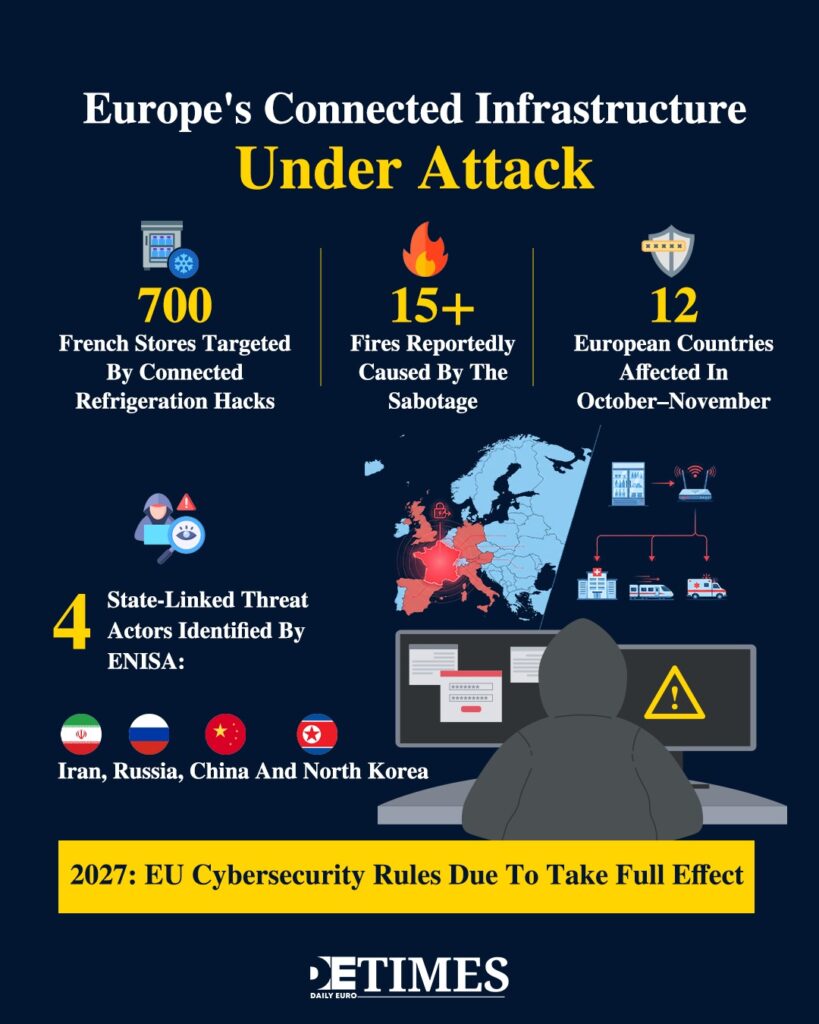
Attackers sabotaged the internet-connected refrigeration systems at roughly 700 French stores last month, ruining stock and igniting at least 15 fires. Paris spent the weeks after the sabotage hunting for the fridge culprit, first eyeing Russian groups and then settling on Tehran.
Early in the week, Foreign Minister Jean-Noël Barrot accused Iran’s Islamic Revolutionary Guard Corps, the country’s elite ideological military force, of orchestrating the attack and promised European Union sanctions. French prosecutors want arrest warrants for the hackers.
While Iran’s foreign ministry has flatly denied the accusations, the denial does little to ease growing anxiety over what, if anything, can prevent the next cyberattack.
A Retaliation Menu Short on Bite
The response Paris has outlined sounds firm at first. Calling in Iran’s ambassador for a reprimand, pushing for EU sanctions and seeking warrants against hackers unlikely to leave Iran add up to diplomatic ritual. Brussels already sanctioned the Iranian cyber firm Emennet Pasargad in March for election meddling and the hacking of the French satirical magazine Charlie Hebdo, and the sabotage happened regardless.
Barrot says the goal is “to deter anyone who might be tempted” to repeat the exercise.
Tehran, which already labours under heavy sanctions and fights a war with Washington, has little left to lose from a European list.
Another entry on the EU sanctions register for Shahid Kaveh, the IRGC-linked hacking group Paris holds responsible, hardly alarms an organisation likely to treat such listings as badges of resistance.
Fridge Hack Who Did It and Whats Targeted Next
Why Tehran Might Target Paris
If the attribution holds, the motive might lie in the war against Iran. Iranian lawmaker Ahmad Bakhshayesh Ardestani has threatened European states lending military bases to Washington, and France has pledged naval support for a defensive mission to reopen the Strait of Hormuz, the key oil shipping route Iran has disrupted.
Paris also hosted Group of Seven foreign ministers at the start of the week, an obvious European stage for any message Tehran wished to send. Suspected Iranian hackers reportedly posted a video with a French-language taunt shortly before the attack, which points in the same direction.
Interestingly, Russia-aligned hackers took the blame last week, and the Kremlin dismissed suspicion of its involvement as “absurd”. Farsi text and Iranian internet addresses are traces any skilled operator can plant.
Paris prosecutors also opened a probe at the weekend into hoax bomb threats against dozens of European flights, seeking links to foreign powers, though they have named no suspect.
Home Appliances Could Be Next
The identity of the culprit changes little about the weakness the attackers found. The sabotage spread to supermarkets in at least 12 European countries during October and November, with France suffering most.
Defenders stopped a similar attempt to overheat blood storage last week.
Juhan Lepassaar, executive director of the European Union Agency for Cybersecurity, known as ENISA, warned that “Today it was fridges, tomorrow it could be routers”, with home appliances next. His worst case is a Europe where police, firefighters, hospitals and transport stop working. He listed state-aligned actors from Iran, Russia, China and North Korea among those targeting European firms and urged manufacturers to build security in from the start.
Reports describe internet-connected refrigeration controllers whose upkeep belonged to outside suppliers, equipment its buyers apparently chose for price and convenience. Independent grocers, who rarely employ security specialists, numbered among the victims.
Lepassaar himself concedes proper protection is expensive.
Brussels answers with EU cyber rules due to take full effect next year and plans to double the size and resources of ENISA. Lepassaar welcomes the plan as a first step and admits it will never be enough.
Keep up with Daily Euro Times for more updates
Read also:
Freezer Hackers Turn Up the Heat on Supermarkets
Fico and Stubb: War Fatigue Finds a Political Voice
EU Cybersecurity Rules Create a New Kind of Cyber Slop