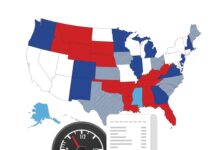

Abdul El-Sayed defeated Mike Rogers to become the first Muslim elected to the United States Senate, declaring, “You chose hate and Michigan chose hope,” to cheering supporters.
In August, he had edged Representative Haley Stevens by about 1 percentage point. The American Israel Public Affairs Committee had spent nearly $30 million against him, its largest outlay on any one race.
Stevens then endorsed Rogers two days before the vote, a late defection voters brushed aside. She objected to campaign ads that tied grocery prices to American support for Israel.
The Michigan saga galvanised the midterms nationwide, and the foreign affairs committees of Congress will inherit its verdict on Israel aid and the Iran war.
President Donald Trump turned the contest into a spectacle. He mocked the candidate’s full name, posted a split photograph of two couples and invoked the 9/11 hijackings to question El-Sayed’s loyalty. The barrage handed the Michigan Democrat a stage, and voters who have not sent a Republican to the Senate in 32 years preferred a message about groceries and petrol prices.
Later, Vice President JD Vance blamed the Iran war for his party’s rout, and Trump acknowledged the conflict had hurt the GOP, though he defended his decision to launch it. The pro-Israel lobby fared no better, reportedly sinking over $55 million into losing races countrywide.
The House Panel Changes Hands
With victories in the House and Senate, the Michigan dispute now moves into the committee rooms. Democrats expect at least 255 House seats, a majority large enough to absorb defections. The House Foreign Affairs Committee slips from the grasp of Republican chairman Brian Mast, and Gregory Meeks of New York, its ranking Democrat, looks the likeliest successor.
Democratic leaders showed their priorities in August. They named Jared Moskowitz of Florida, a firm opponent of conditions on military aid to Israel, ranking member of the Middle East and North Africa subcommittee. The post puts him in line to chair it.
The choice clashes with a restless caucus. In July, 103 House Democrats voted to cut $3.3 billion from military aid to Israel; 98 voted against. The amendment failed, with Republicans overwhelmingly opposed, and the near-even Democratic split left the leadership arguably out of step with many of its own voters.
El-Sayed’s Likely Committee Home
El-Sayed will not sit on the House panel, because senators serve only in their own chamber. His natural destination is the Senate Foreign Relations Committee, which handles legislation on arms sales, aid and sanctions and vets ambassadorial nominees.
Reports citing a former aide say he covets a seat there, a wish only senior Democrats can grant. He calls for an end to unconditional military aid, a position his opponents read as hostility and his supporters read as thrift. Rogers, who once chaired the House Intelligence Committee, portrayed the stance as too extreme for Michigan, but voters apparently disagreed.
The committee’s 22 members usually divide closely between the parties, so one senator seldom decides outcomes. A determined member can still organise colleagues behind sanctions or conditions on aid, and a freshman with a countrywide audience may attract more allies than seniority alone implies.
How Foreign Policy Could Change
Committee seats carry power because a gavel means hearings, and this White House has avoided them. Expect sessions on the Iran war, war powers and arms transfers, and expect conditions on aid — long a fringe demand — to enter the mainstream.
Trump says he has no immediate plans to resume strikes, which makes war powers the first order of business.
The Iran agreement will also land on their desks: Trump promised in June to send its text to Congress for review.
Gulf capitals, which reportedly pressed Washington to de-escalate, will watch every session closely, because their security hangs on the outcome. European governments, wary of Washington’s unpredictability, will likely do the same.
But power has limits. A presidential veto looms over every bill, and a two-thirds majority in each chamber to override it looks unattainable. Moskowitz and Meeks represent continuity; El-Sayed and progressive House members represent pressure. How much changes will probably depend on the friction inside one party.
Keep up with Daily Euro Times for more updates
Read also:
From Manchester to Washington: Foreign War Fuels Electoral Upheaval
RFK Jr. Faces Senate Scrutiny: The Future of U.S. Healthcare
Guilfoyle Gets the Boot: Greece Eyes Washington’s Judgment