
Two wars drag on without any end in sight. Ukrainian trenches barely budge after three years of grinding warfare. Gaza’s brief ceasefire collapsed in March after just two months of quiet.
America has tried to broker both conflicts. Now European capitals watch Washington’s patience run out and see their chance to step in. This isn’t about moral posturing. Europe’s building a new business model for ending wars that nobody can win through fighting.
American Fast Food Diplomacy Hits Reality
Washington enjoys its conflicts like its food: fast, decisive, and clearly labelled.
Trump's team suggests a summit in Alaska where everyone shakes hands and goes home happy. European leaders worry they'll get squeezed out of decisions about wars situated in their own backyard.
Gaza shows how American confidence crashes into Middle Eastern stubbornness. The U.S. pulled out of peace talks in July when Hamas asked for humanitarian aid before resuming negotiations. For Hamas, that’s ‘basic humanity.’ For America, it’s stalling tactics.
These aren’t communication breakdowns. They’re mismatches between American impatience and conflicts that move at geological speed.
Washington sets deadlines, whilst wars ignore them.
That’s where Europe looks useful. European diplomats don’t mind talking for decades if needs be; in fact, Ukraine and Gaza demand just that.
Europe Spots the Opening
European capitals have watched America’s frustration build for months. Every failed deadline creates space for more patient approaches. European officials push to join any Trump-Putin summit whilst quietly preparing different exit strategies.
On Gaza, Europe moves boldly. France still plans Palestine recognition despite renewed fighting. Germany blocks weapons exports that could fuel Israeli operations.
These moves create distance from American policies without breaking alliances. Europe signals availability when America’s approach runs out of steam.
The more America struggles, the more attractive European patience looks to exhausted conflict parties.
Building Different Peace Business
Europe sells something America doesn’t offer: time without pressure.
Continental diplomacy thrives on endless meetings that supports incremental progress rather than big breakthroughs.
France leads Palestine engagement because it offers Hamas political recognition without military threats. Germany keeps Ukraine channels open without demanding immediate NATO membership. Italy focuses on Mediterranean stability because it needs trade routes, not military victories.
Each European country brings different skills. France has Arab connections. Germany has Russian relationships. Britain has Middle East experience and close ties with the GCC. Nobody carries the full load, but everyone stays relevant.
This distributed approach works because these conflicts spread across regions where European countries have deep relationships. The business model gets stronger as wars get longer.
Money Talks Louder Than Missiles
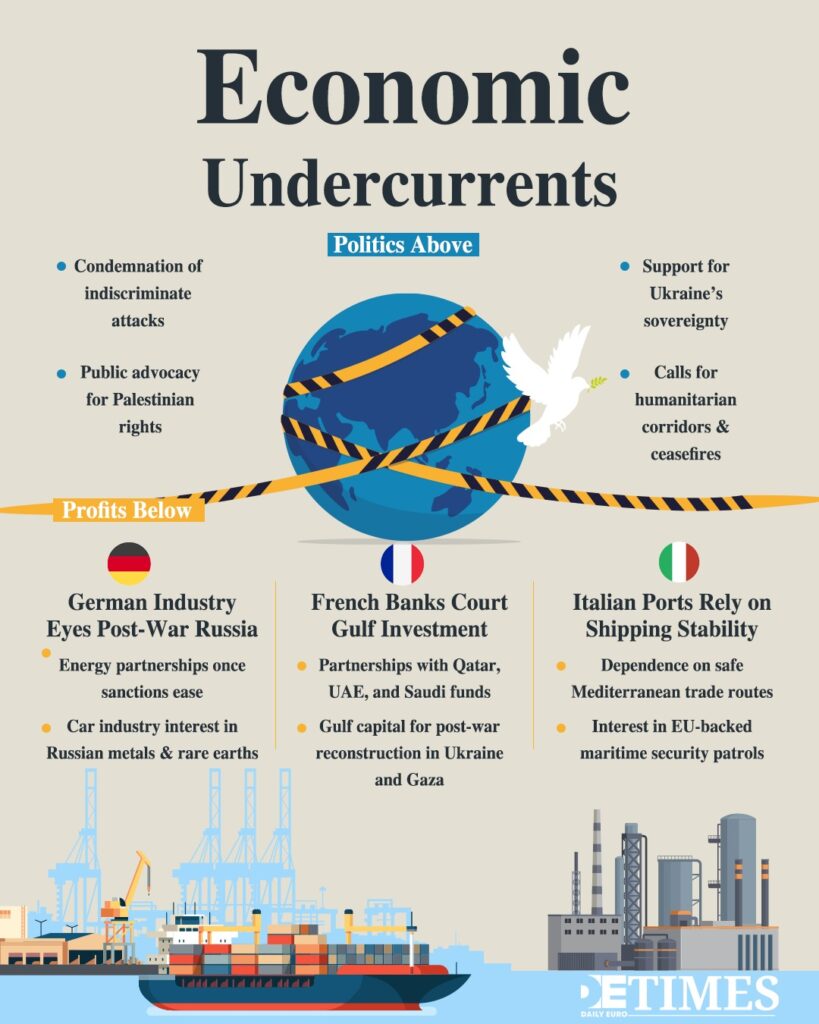
European companies do their own calculations whilst politicians make speeches. German businesses dream of Russian partnerships once the shooting stops. Anglo-French firms need Gulf capital flowing through European real estate and the banking sector. Italian ports however depend on secure shipping routes via the Mediterranean.
These economic interests don’t disappear during wars. They wait underground for peace to restore profitable relationships. European diplomats understand this reality better than American policymakers who think economics follows politics.
Public statements support Ukrainian and Palestinian rights because voters expect moral positions. Private negotiations protect business relationships because companies need future profits. European mediation protects both by keeping everyone talking whilst nobody wins decisively enough to burn bridges permanently.
Europe’s Secret Advantage: Talking to Everyone
European leaders still meet with Putin despite sanctions. Hamas uses European channels to communicate globally. Israel grumbles about Palestine recognition but keeps channels open to European partners.
America’s approach burns bridges through ultimatums. European diplomacy builds them through careful ambiguity about whose side matters most. This connectivity pays dividends when conflicts hit exhaustion points.
Putin needs face-saving exits from Ukraine positions. Hamas needs political recognition beyond military resistance. Israel needs regional normalisation beyond short-lived security victories. All require patient conversations in neutral venues.
Europe offers comfortable chairs and endless coffee whilst America offers deadlines, without the red lines.
Frozen Wars Work Better
European analysis suggests both conflicts are heading towards frozen lines rather than resolution.
Ukraine’s lines barely move despite fighting. Gaza alternates between combat and quiet without lasting agreements over any ‘day after.’
European diplomats prefer this to decisive victories that create permanent winners and losers. Netanyahu faces growing opposition from Israeli military leaders questioning expanded Gaza operations. Ukrainian officials show increasing warfare fatigue.
Both dynamics create space for patient European mediation that doesn’t demand immediate breakthroughs. Frozen conflicts provide ongoing diplomatic relevance without expensive military commitments.
Europe’s Deal Menu
European mediation prepares packages giving everyone something whilst denying everyone everything. Ukraine gets security guarantees without NATO expansion triggering Russian ultimatums. Palestine gains recognition without immediate sovereignty threatening Israeli security. Russia earns respectful treatment whilst accepting military consequences.
The formula requires patience but offers sustainable arrangements that military victories cannot provide. European settlements prioritise staying power over dramatic headlines.
As America’s patience reaches breaking points, Europe prepares alternatives offering all parties honourable exits from positions that fighting cannot resolve. Wars end when talking beats shooting. Europe’s betting it can outlast everyone else at the negotiating table.
Keep up with Daily Euro Times for more updates!
Read also:
Frozen Over, No More: Putin and Trump’s Meeting in Alaska
Talking Diplomacy at a Time of War
Strategic Silence: Why Iraq Is Staying Out of Iran’s War

