June18 , 2026

A Double Visit to Earth: Comets as a Mirror of Divisions and Hope in Global Science

Related

Trump’s Peace Push Serves the 2028 Republican Succession

A ceasefire that finally frees the Strait of Hormuz also frees Donald Trump to spend his last months in office building a 2028 inheritance for his chosen heir.

Burnham Builds Politics Through Manchester Music

Andy Burnham has turned Manchester music into a political identity that sets him apart from Westminster Labour.

Sagrada Família Nears Completion, Homes face Demolition 

Sagrada Família Nears Completion, Homes face Demolition Keywords: Sagrada Família, Barcelona, Glory Façade, Pope Leo, housing, Gaudí Brief: Stone towers above apartment roofs; a narrow street meeting a monumental façade.The Sagrada Família's near-completion is a triumph of persistence, but the unresolved Glory Façade dispute keeps turning celebration into an argument about homes and urban justice.Pope Leo XIV held Mass at the Sagrada Família on Wednesday and offered his formal blessing to the Tower of Jesus Christ, making it the world's tallest church at 172.5 metres, overtaking Ulm Minster in Germany. The ceremony fell exactly 100 years after Antoni Gaudí's death, and fireworks lit up the Barcelona skyline as crowds gathered beneath the basilica's newly completed central spire. The tower itself had been structurally finished on 20 February; Wednesday's ceremony was its inauguration by the 11th pontiff to reign since the project broke ground in 1882. Reuters, AP, and Euronews all treated it as one of the architectural events of the year. The harder question lies a few streets away. All 18 towers are now structurally complete, and the full interior is open to visitors. But the Glory Façade, designed as the basilica's grand main entrance and considered the most complex element of Gaudí's original plan, remains under construction and is estimated for completion between 2034 and 2035. At its centre sits a monumental staircase still caught in an unresolved urban planning dispute with Barcelona city authorities. Some proposals linked to the staircase could require demolition of residential buildings directly across from the basilica's entrance. Completion Is Not the End The staircase is not a decorative detail. It would connect the Glory Façade's elevated entrance to street level while allowing traffic to pass beneath, a solution the Construction Board describes as technically necessary but which residents and city officials have not yet approved. The dispute has intensified as the basilica's public profile has peaked. For residents, the lack of certainty about what demolition, if any, will be required is itself the problem: they have been living under the uncertainty of an unfinished nineteenth-century vision for decades, and the celebration above does not resolve the planning question below. This matters because Barcelona is not an empty museum. It is a living city in which monumental ambition still has to negotiate with residents, streets, and housing pressure. The closer the basilica comes to completion, the more urgent it becomes to ask whether finishing Gaudí's final vision should still be allowed to displace present lives in a dense modern neighbourhood. The Papal Visit Changes the Mood, Not the Facts Pope Leo's blessing matters symbolically because it wraps the basilica in spiritual endorsement at the moment its image is most triumphant. He called it an "architectural masterpiece." Euronews described the ceremony as the culmination of a historic public celebration. The visit also coincides with a centenary of Gaudí celebrations across Barcelona, with exhibitions and cultural events honouring the architect's legacy throughout 2026. That ceremonial weight is real, and it makes any remaining obstacle look, from a distance, like obstruction rather than a legitimate civic question. Once a building becomes a near-sacred symbol of national and religious pride, the neighbours who resist elements of its completion risk looking selfish by comparison. That imbalance is precisely why the housing issue matters. A masterpiece does not automatically justify everything done in its name. A Triumph with an Asterisk The Sagrada Família deserves admiration. Its endurance, craftsmanship, and symbolic power are extraordinary, and this week's milestone is genuinely historic. But historical grandeur does not remove the moral complication at the project's edge. Barcelona can celebrate the nearing completion of Gaudí's masterpiece whilst still asking what a twenty-first-century city owes to the people who live in the path of an unfinished nineteenth-century vision. The church may be approaching the finish. The argument around it plainly is not.Keep up with Daily Euro Times for more updates! Read also: Southern Europe Drying: How Real Is the Water Crisis? Roman Angel Resembling Meloni Painted Over Shattered Ceasefire: Lebanon Reports Hundreds of Israeli Breaches

Mediterranean Demographic Squeeze of the Coming Decade 

On the day Europe's most extensive migration overhaul takes effect, birth rates on both Mediterranean shores are falling and a workforce gap is widening.

Ageing Societies Slow Science’s Edge

Ageing societies do not only strain pensions and healthcare. They may also make science less bold, less disruptive, and more incremental over time.

Share

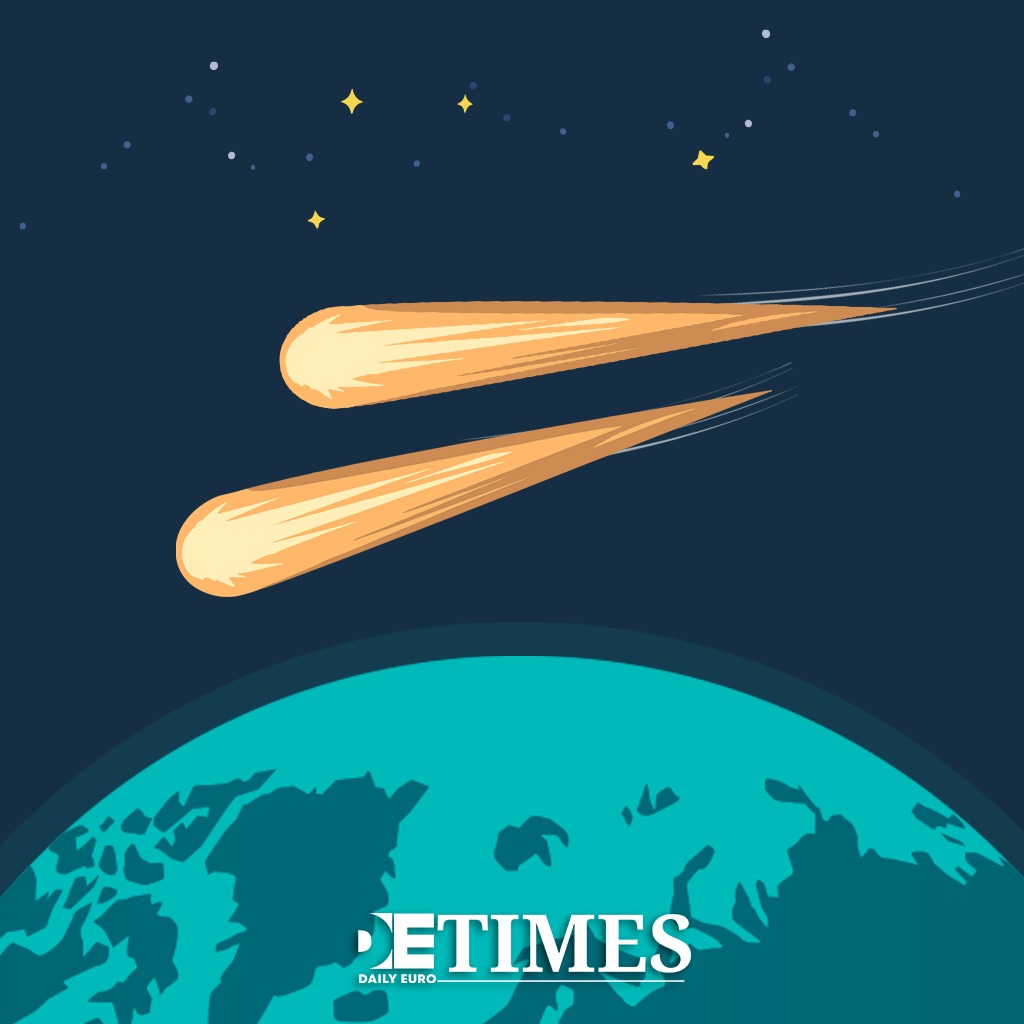
In October 2025, two mysterious space travelers — C/2025A6 (Lemmon) and C/2025R2 (SWAN) — approached Earth almost simultaneously, offering an unusual opportunity to observe a double comet appearance.

Yet this celestial spectacle concealed a much deeper metaphor — the divisions and simultaneous need for unity in the global scientific community.

Different Levels of Access to the Miracle

In Western countries — such as the United States and the European Union — the event was celebrated as a celebration of science, with public lectures, observatory demonstrations, online broadcasts from NASA and ESA, and citizen observer participation.

Special guidelines and observation maps were developed for the dual event.

Meanwhile, countries with fewer resources, such as India, Nigeria, and Peru, more often encountered difficulties: poor skies due to lighting or atmospheric conditions, limited telescopic access, and fewer opportunities for bilateral participation.

Instead, enthusiastic observers relied on simple binoculars, open-source data, online broadcasts from other regions, and global open-access initiatives.

This difference in approach became emblematic: it wasn’t so much who saw the comets, but who could afford to see them.

Relevance for Science and Collaboration

Comets have long been viewed by scientists as remnants of the formation of the Solar System — “fossils” of the material world that preserve information about its early stages.

When two such comets appear almost simultaneously, it’s a rare chance to mobilize resources and attention. However, the availability of observations has proven uneven. Thus, the rhetoric of global science runs into practical limitations: equipment, education, infrastructure, internet access — all of these become barriers.

From the perspective of international science, such an event should symbolise not competition, but collaboration. After all, data exchange, joint transatlantic broadcasts, and open access to astronomical information allow “comets” to become a bridge between countries.

In other words, when one country sees more, its job is to ensure that others can see too. If access remains limited, it signals a growing gap.

USA, Europe: Resources, Infrastructure, Participation

The USA and Europe have extensive resources: university observatories, powerful telescopes, and public engagement plans.

For Comet Lemmon and SWAN, instructions on how to find them in the sky, maps, and apps were published.

Educational programs allowed schoolchildren and students to spend evenings observing, discussing, and taking photographs. This widespread participation reinforces a sense of belonging to global science.

India, Nigeria, Peru: Enthusiasm Despite Limitations

On the other hand, in India, Nigeria, and Peru, participants often operated with limited equipment. Binoculars instead of large telescopes, mobile apps, online broadcasts (for example, from foreign observatories), and data from open databases.

These observers often become examples of “citizen science” — science where access to the most powerful instruments is less important than motivation, network connectivity, and open sharing.

However it’s important to emphasise: their capabilities were limited — and yet they were still part of the global observation landscape.

Meta-agenda: Division and the Need for Unity

The symbolism of the double comet appearance reflects a growing rift: between those with access to the best instruments and infrastructure, and those forced to observe through digital broadcasts or with simple equipment.

Yet it is also a call for unity: for science to be inclusive, accessible, and open.

After all, if two cosmic objects can be visible almost simultaneously, why not strive to ensure that everyone can see them?

Impact for Global Scientific Collaboration?

  • Open data and collaborative platforms: if comets can be observed online, why not make observational data and collaborative processing products continuously available?
  • Local infrastructure and training: supporting observatories, even simple ones, in countries with fewer resources expands the participant base and creates new scientific citizens.
  • Public participation and science for all: in both wealthy countries and those with fewer resources, public engagement—including schoolchildren, students, and amateurs—is essential. This isn’t just observation; it’s a cultural and educational strategy.
  • Global initiatives: collaboration between countries, sharing equipment, experience, and data—results outperform competition. In space observations, the winner is the sharer, not the one who steals private access.

The double appearance of Comets Lemmon and SWAN is a rare celestial event and simultaneously a powerful metaphor. It demonstrates that science today is not only about discovery but also about participation.

It’s not about who sees, but about who can afford to see. And this is precisely what should become the growth point for the international scientific community.

After all, global events require global participation. And if we don’t strive for it, we risk creating not “science for all,” but “science for the few.”

Read the Latest Articles on DET

From Sweden to Türkiye: The Stark Gender Divide in Unpaid Work

Social Capital Lives On: The Story of Germany and Russia

When the Angels Return: How Victoria’s Secret is Shocking the New Era of Beaut

Your Mirror to Europe and the Middle East.

We don’t spam! Read more in our privacy policy