
Britain’s plan to grow defence spending to 2.5% of GDP signals its readiness to face European and global threats.
The United Kingdom announced plans to allocate 2.5% of GDP to defence spending by 2030. This commitment responds to growing security threats in Europe and aligns with NATO‘s Defence Investment Pledge, which urges member states to meet or exceed a 2% GDP threshold. The proposal by Labour leader Keir Starmer signals bipartisan support for military funding increases amid concerns about global stability and national security.
The move comes amid escalating tensions between NATO and Russia. Former Deputy Supreme Allied Commander Europe, Sir Richard Shirreff, warned of the potential for broader conflict if nations fail to bolster deterrence capabilities. Starmer’s plan suggests a recalibration of Britain’s role within NATO, underpinned by increased contributions to collective defence.
Training Ukrainian Forces in Conflict Zones
The UK government recently signalled its intention to conduct military training within Ukraine. Defence Secretary Grant Shapps revealed discussions to expand UK-led training missions beyond current operations in Poland and other NATO countries. The initiative underscores Britain’s commitment to Ukraine’s resistance against Russian aggression while reflecting broader Western strategy to counteract Russian advances.
This proposed deployment comes amidst a protracted war that has strained Ukraine’s military resources. Training programs aim to enhance operational readiness and provide specialised skills, including urban warfare and counter-drone tactics. These efforts represent a shift from indirect support to a more direct engagement model, risking heightened tensions with Moscow.
Defence Posture in the Indo-Pacific
In addition to European commitments, the UK is expanding its defence footprint in the Indo-Pacific region. The Royal Navy recently announced plans to deploy an aircraft carrier to Australia, reflecting a strategic pivot to counterbalance China’s growing influence.
Collaborative defence initiatives such as the AUKUS alliance and the Global Combat Air Programme highlight the UK’s effort to fortify partnerships with Australia and Japan while showcasing advanced technological capabilities.
Defence experts have expressed concerns over resource allocation, warning that simultaneous commitments in Europe and the Indo-Pacific could stretch the UK’s military capacity. Challenges include sustaining naval deployments while maintaining land and air readiness, particularly as NATO faces increasing demands from the Ukrainian conflict.
Budgetary Challenges and Strategic Priorities
The UK’s defence budget increase follows years of constrained spending that left gaps in equipment and readiness. Former Chief of the Defence Staff, General Sir Nick Carter, stressed the necessity of modernising ageing systems to meet evolving threats. Investments will prioritise cyber capabilities, advanced weaponry, and the integration of artificial intelligence into military operations.
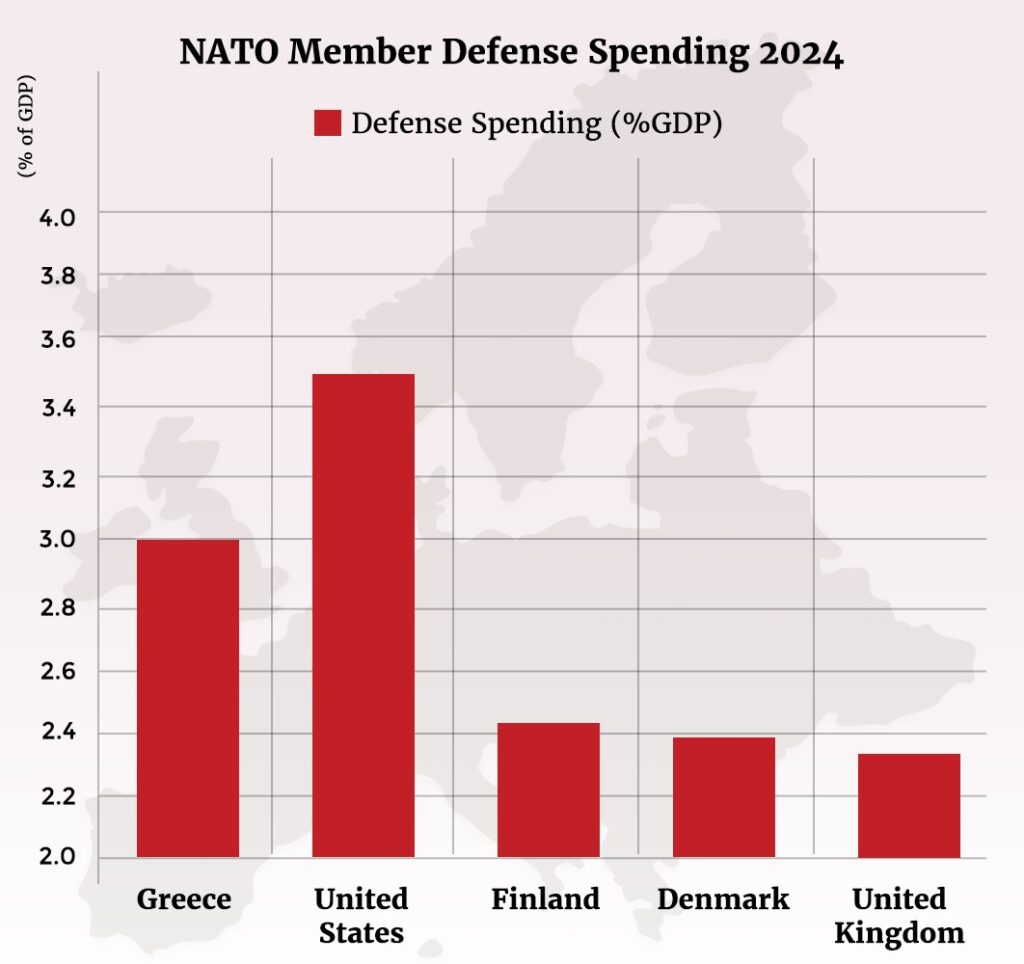
Critics argue that proposed spending falls short of addressing long-term challenges. Britain would require nearly double its current budget to effectively modernise its armed forces and maintain global commitments.
Implications for NATO Unity and European Security
As Europe faces heightened instability, Britain’s defence strategy carries significant implications for NATO cohesion. The alliance has lauded increased European contributions but remains wary of potential divisions over priorities between member states. Enhanced UK spending and operational commitments aim to bridge gaps, particularly as the US signals strategic recalibrations in its global military posture.
Increased funding and expanded deployments position the UK as a pivotal actor in shaping the future of European and global security. These measures reinforce Britain’s commitment to NATO while addressing broader geopolitical challenges, from Russian aggression to Chinese assertiveness.

