

On Tuesday, Saudi aircraft struck an Emirati cargo at the Mukalla port. Abu Dhabi responded by announcing a departure hours later. The theatre involving Riyadh and Abu Dhabi carries a dramatic aura. Saudi Arabia demanded an exit within a single day after hitting what authorities called a weapons delivery meant for southern separatists.
While the United Arab Emirates declared its personnel would leave, and headlines hinted at a broken alliance, a cold logic is at work. Both countries want the Houthis gone and want Yemen strategically aligned. A state of deliberate partitioning meets their needs.
Legacy of Controlled Friction
The powers have competed in many areas. In Sudan, Riyadh backs the army while Abu Dhabi reportedly helps the paramilitary. In Somalia, the two administrations stand on opposite sides regarding Somaliland. Even so, such clashes have remained within safe bounds.
The Qatar blockade provides a good example. For several years until recently, Saudi Arabia and the UAE ended cooperation with Doha. Kuwait acted as a go-between for the duration of the episode.
After the last American election, the kingdom acted to end the dispute. The Al-Ula summit reestablished an association through a “solidarity and stability” pact. The blockade ended without Qatar yielding to any demands.
Strategic Manoeuvres and the Oil Prize
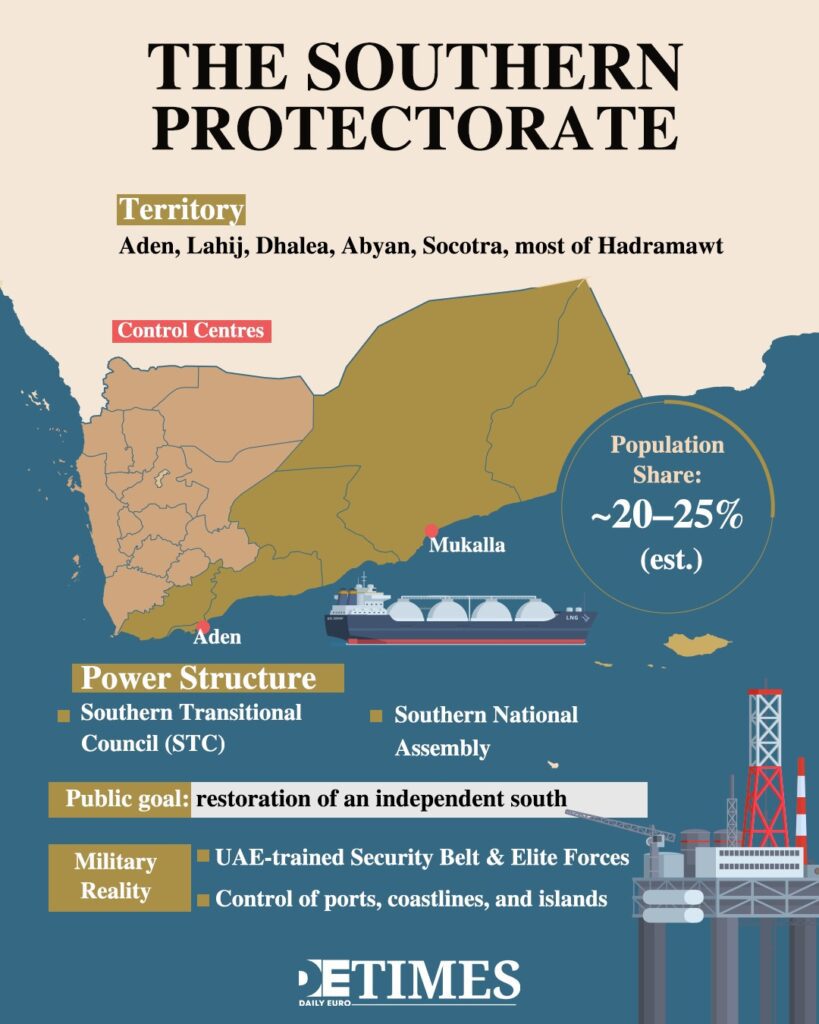
The Southern Transitional Council took the Hadramawt governorate in early December. The area contains the vast majority of Yemen’s oil. Saudi-funded forces left their posts without fighting, leading to notions of a secret accord.
Publicly, Rashad al-Alimi, leading the Presidential Leadership Council, condemned the UAE for eroding state power. Saudi Arabia concurred and called the Emirati actions a threat. The kingdom hit the Mukalla port cargo. Abu Dhabi dismissed claims of weapon smuggling and confirmed its own departure soon after.
Convergence of Shared Goals
Both countries’ leaders have shared goals. Neither accepts Houthi rule. Both want port and trade access. Each prefers a Yemen weak enough to stay under foreign management.
The disagreement involves which parties will manage specific territories. Saudi Arabia pulled forces from Aden and transferred troops elsewhere. Riyadh intends to guard its border using paid local fighters. Air power acts as a tool to prevent territory changes.
In recent years, frontlines have remained stationary. UN talks have stopped.
Evidently, no external bombing or internal pressure will break the stalemate.
The Yemeni Protectorates
Yemen seems to drift toward a deliberate partitioning of sorts. The age of static regional conflict has yielded to transactional manoeuvres. Yemen tends toward such a course.
A likely outcome involves power-sharing among local entities. Each faction already oversees its own sphere of control.
Formal talks will likely approve the reality as foreign soldiers leave. The STC manages the south while the Houthis administer the northwest and Saudi-allied groups hold the northern border. A nominal federal shell provides a facade for separate armies and tax systems.
The setup serves Gulf goals. Riyadh guards its borders without occupation. Abu Dhabi gets port access via the STC. Both block Houthi growth while avoiding reconstruction costs.
The loud friction over ports and ultimatums diverts attention from the core coincidence of interests. Both countries see their interest in a subdivided region they can direct over any entity they must fear.
Keep up with Daily Euro Times for more updates!
Read also:
Geopolitics in the Skies, New Airport in Socotra
STC Take Hadhramaut: Fragmentation Leaves No Winners
September Under Siege: Houthis Shut Down Republican Patriotism