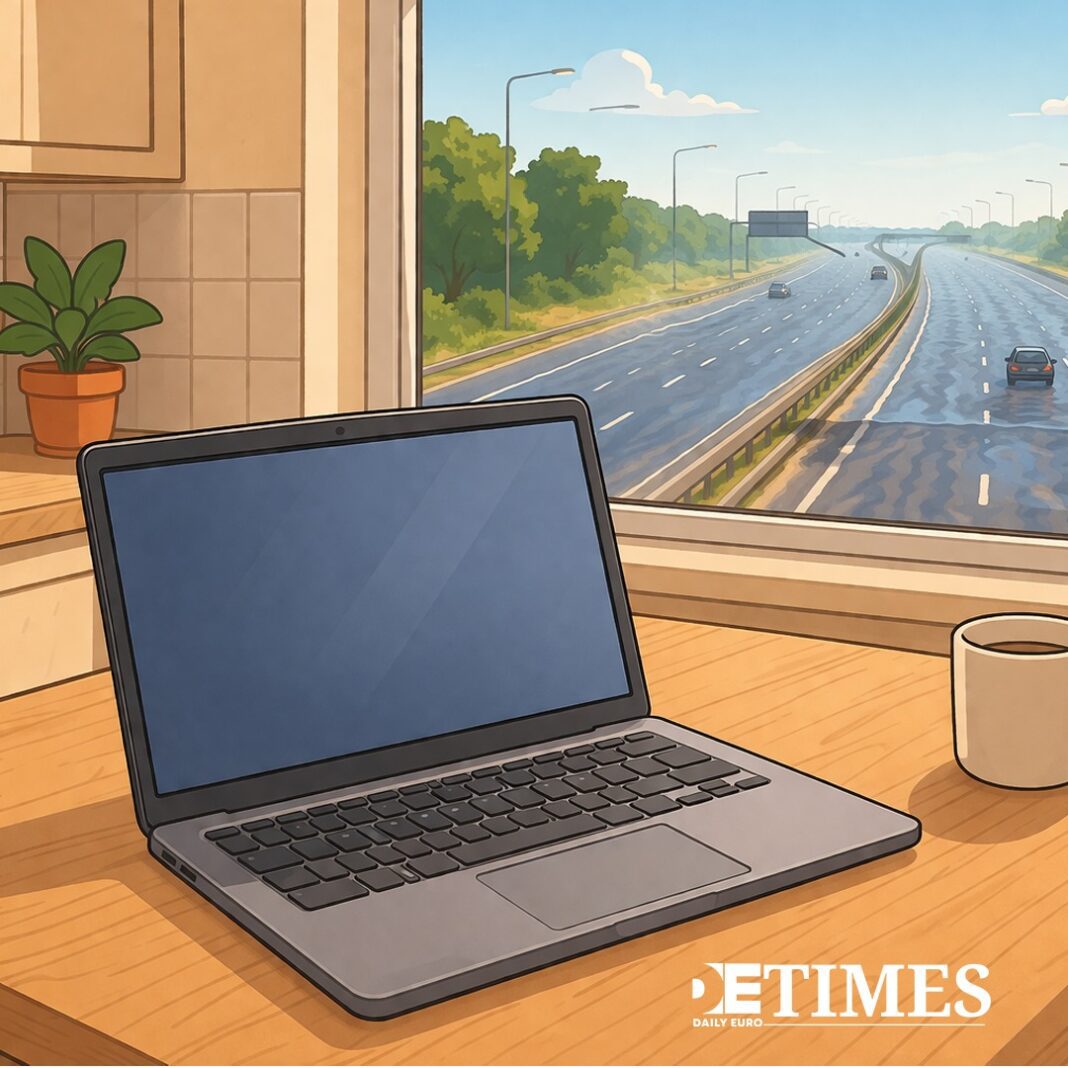
When the European Commission tells people to work from home, it does not sound like normal governance. It sounds like emergency language returning. Yet that is exactly what happened on Tuesday, as Jørgensen urged EU countries to consider voluntary fuel-saving measures after an emergency gathering of energy ministers in Brussels, convened under the Cyprus Presidency of the EU.
The backdrop is stark. Iran’s closure of the Strait of Hormuz since early March has disrupted roughly 20 per cent of global oil supplies. The EU estimates that gas prices have risen 70 per cent and oil 50 per cent, adding an extra €13 billion to the bloc’s fossil fuel import bill. Brent crude peaked at $126 per barrel. This is Europe’s worst energy shock since the 1970s, according to analysts drawing comparisons with the oil embargo that followed the Yom Kippur War.
Telework was once a public health tool. It is now being presented as an energy tool. That shift tells you something about how quickly modern mobility becomes a political liability.
A Familiar Playbook, a Different Crisis
The Commission’s specific concern is the transport sector. The Persian Gulf supplies over 40 per cent of the EU’s jet fuel and diesel imports, and the bloc’s limited refining capacity means there is no quick domestic substitute. Jørgensen’s letter to national energy ministers, sent on 30 March and seen by Euronews, advised governments to defer non-essential refinery maintenance, consider biofuels, and prepare for prolonged disruption.
Those are technical levers. Telework is cultural. Calling for remote work is an admission that demand reduction is sometimes the only lever that moves fast. You cannot build new refineries in a week. You cannot reroute a global shipping system with a press release. You can reduce commuting tomorrow.
That is why the idea keeps returning. It is immediate, it looks responsible, and it signals collective discipline. The Commission used the same logic in 2022, when it introduced a 15 per cent voluntary gas reduction target following Russia’s invasion of Ukraine. The playbook is not new. The crisis is.
Energy Saving Becomes Behaviour Policy
Asking societies to adjust their routines is never a small intervention. It touches work culture, productivity, childcare, retail economies, and city life. The Commission framed it as voluntary, but the emotional weight of the message is not neutral, particularly coming after the pandemic years.
There is also the question of who actually bears the cost. Remote work is possible for office professionals, managerial roles, and digital services. It is not an option for nurses, builders, cleaners, drivers, hospitality workers, or factory staff. A policy that frames telework as a national energy response risks rewarding the already comfortable whilst doing nothing for those who must still commute.
That is where resentment can take root. Those who cannot work from home may experience the measure as symbolic, even performative, because they are still spending on fuel whilst others stay home on the same pay. If governments want voluntary saving to hold, they need to communicate fairness clearly. Otherwise, restraint becomes culture war.
The Pandemic Echo Nobody Wanted
Telework carries memory. For many, working from home recalls isolation, school closures, and the feeling of life placed on hold. Jørgensen’s remarks at Tuesday’s press conference were explicitly compared to COVID-era messaging by several journalists in the room. The Commission knows this. It will try to keep the tone voluntary, temporary, and pragmatic.
Still, the emotional residue is real. Policymakers may see telework as harmless efficiency. Many citizens will hear it as another signal that normality is no longer stable. Europe entered 2026 with gas storage at just 30 per cent capacity after a harsh winter, well below the 60 billion cubic metres held in early 2025. The energy shock did not arrive in good conditions.
Transport Is Where Lifestyle Meets Geopolitics
The deeper problem is structural. Even with years of renewables expansion and efficiency investment, oil remains central to daily European life because transport still runs on it. A prolonged disruption therefore hits politics quickly: it raises bills, increases freight costs, feeds inflation, and reaches elections.
The International Energy Agency has published guidance recommending remote working and greater public transport use as short-term demand responses. Some governments are already moving. In Australia, two state governments made public transport free to reduce fuel demand. The Philippines declared a national energy emergency on 24 March. The G7 met on 30 March and pledged to take “any necessary measures.” Brussels is expected to announce a fuller package in the coming weeks.
Calls for telework sit at the soft end of this spectrum. They buy time and reduce immediate strain, but they are not a solution to a crisis rooted in the EU’s continued structural dependence on imported fossil fuels traded through chokepoints it does not control. As the Bruegel Institute noted last month, each new shock confirms that shifting dependency from Russia to other suppliers did not resolve the underlying vulnerability. It relocated it.
Telework is not glamorous policy. It is what states reach for when they cannot fix the underlying problem but still need to show they can manage its consequences. Asking people to commute less buys time. Reopening a blockaded waterway requires something else entirely.
Keep up with Daily Euro Times for more updates!
Read also:
Three Forgotten Islands Could Decide the Strait of Hormuz
Qatar’s LNG Shock: When Energy Security Meets Physical Reality
Linking Up the Grid: Energy Cooperation between Austria and the UAE