
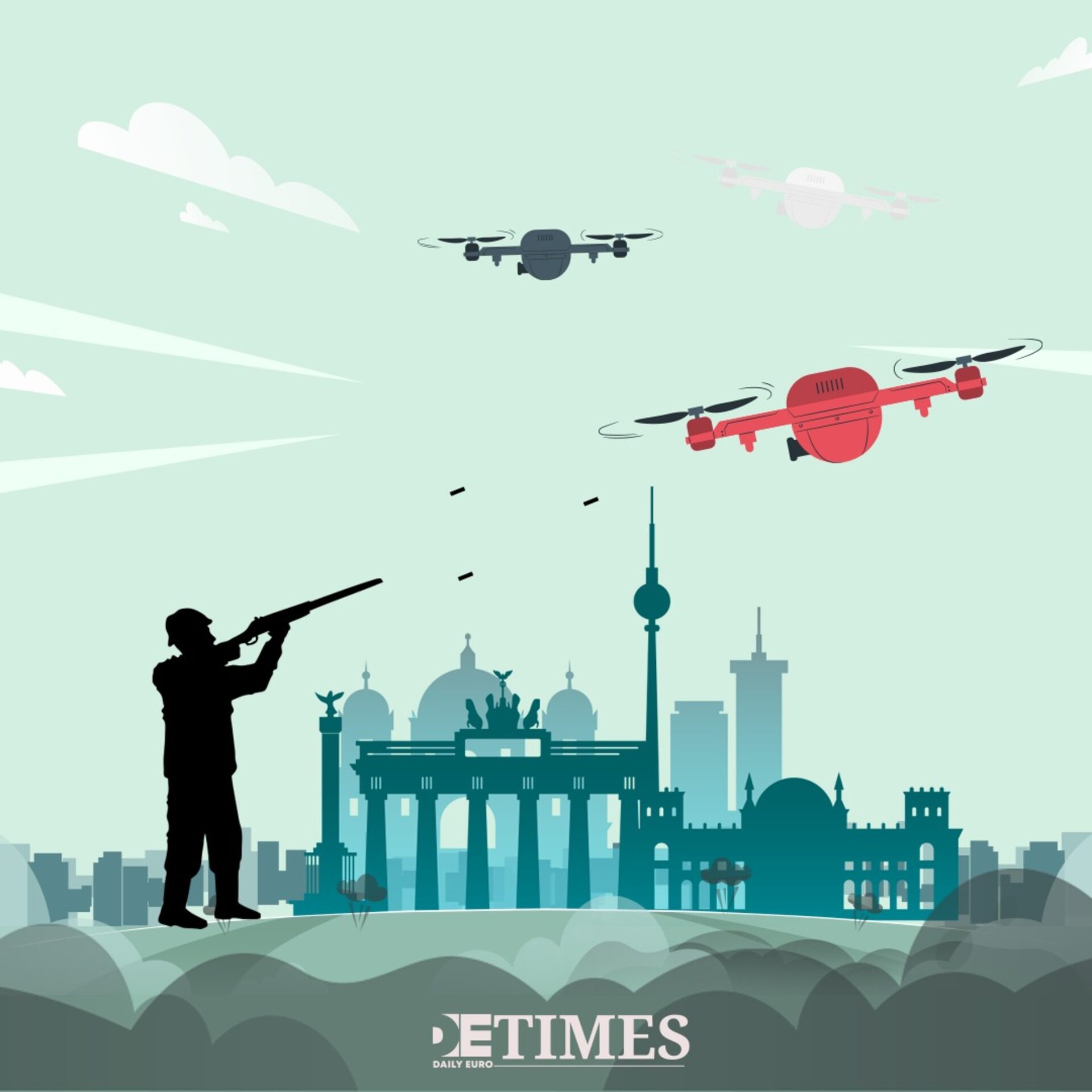
Germany’s cabinet has recently introduced new regulations that permit the military to shoot down suspicious drones near military installations or critical infrastructure. This decision is a response to the urgent and heightened fears regarding drone operations, which have emerged as a significant security challenge, especially following Russia’s invasion of Ukraine in 2022.
Interior Minister Nancy Faeser emphasised the escalating threat posed by drones “since Putin’s aggression against Ukraine, we have observed an increasing frequency of drone usage, presenting a growing challenge for police and their existing technology” for the BBC.
This new authorisation aims to tackle the expanding use of unmanned aerial vehicles in a heightened security context, with Russia accused of engaging in a “shadow war” against Western nations backing Ukraine—a claim that Moscow refutes.
Importance of Taking Safety Measures
The use of drones for intelligence, sabotage, and even as instruments for launching attacks on essential infrastructure raises considerable concerns. Such actions are suspected to form part of a more extensive Russian strategy to weaken its adversaries without direct military engagement.
The potential danger of these actions is highlighted by recent statements from Polish Prime Minister Donald Tusk, who stated that Russia had orchestrated plans involving ‘air terror’ targeting airlines globally, including those within Poland.
In Germany, the threat posed by these drones has become increasingly evident through recent episodes.
German authorities reported sightings of drones over multiple military sites, such as Manching Air Base near Ingolstadt, where at least ten drones were observed in a single night. Similar cases have been reported near other locations, including Neuburg an der Donau and Ramstein Air Base: a significant U.S. military hub.
Given the continuity of these incidents, German officials suspect that espionage or sabotage could be the underlying motives behind these incursions.
The Bundestag’s Latest
The latest proposal by the Bundestag, if passed, allows military action against drones.
In addition to parcel fires in countries like Germany and the UK, Russia is thought to be involved in attacks on warehouses and railway systems across the EU-27.
Russia’s military intelligence agency, the GRU, considers these incidents part of a larger operation. Although Moscow denies any involvement, Western security officials believe there is a link between Russia and the increasing number of sabotage activities.
As Europe faces a rising number of drone incursions and covert strikes, Germany’s choice to empower its military to neutralise threats reflects a proactive shift in its strategy towards modern security challenges.
Germany seeks to bolster the security of its airspace and essential infrastructure against the adapting tactics employed by foreign actors, especially in light of the war in Ukraine.

