
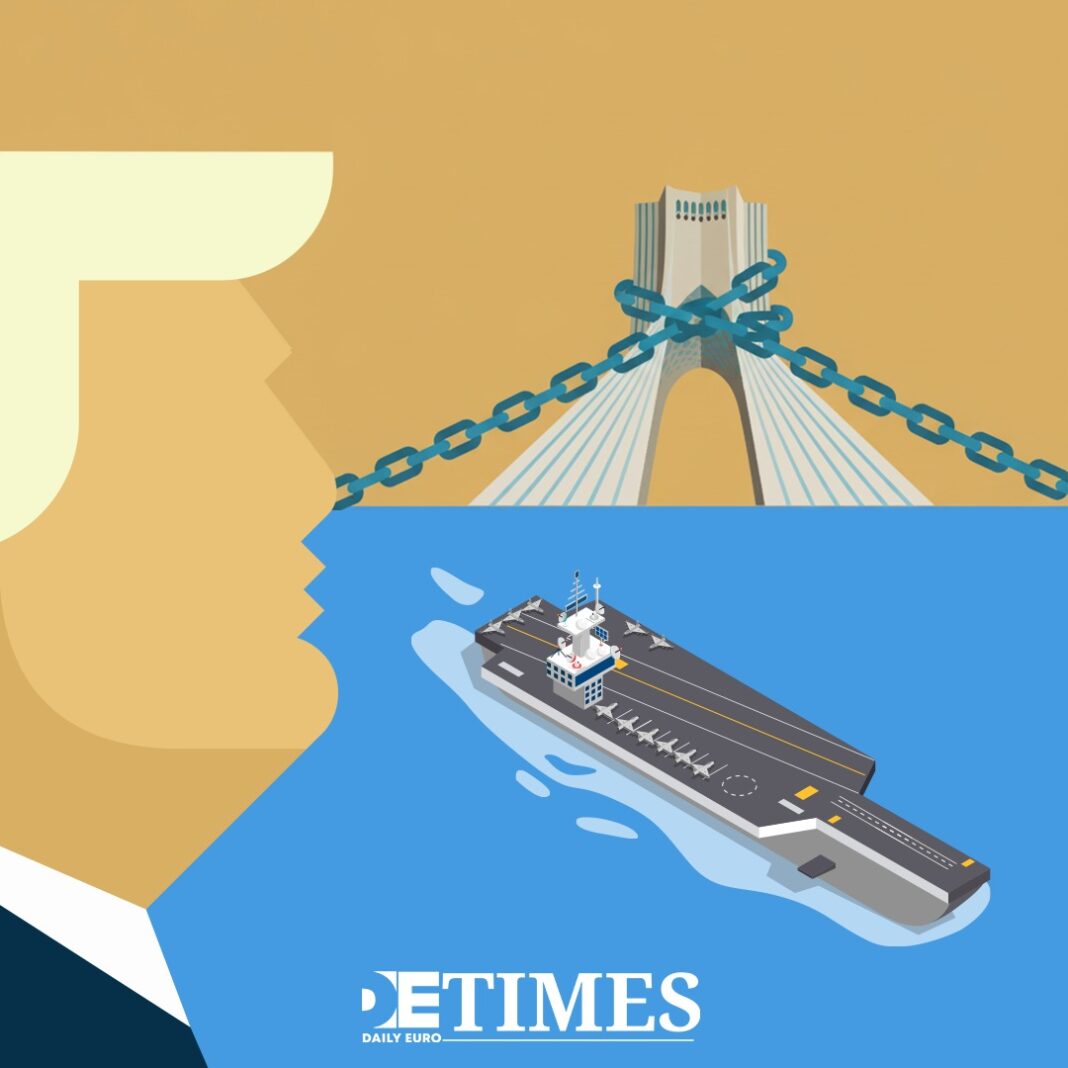
The USS Abraham Lincoln carrier strike group arrived in the Gulf region on Sunday to conclude a swift ten-day redeployment from the Indo-Pacific that also saw dozens of F-15 fighters stationed at Muwaffaq Salti Air Base in Jordan as tensions with Iran ramp up.
Washington now maintains a historically dense military presence near Iranian waters with sophisticated hardware that communicates a readiness for more than simply rhetoric.
The destroyers carry Tomahawk cruise missiles with a reach that places the entire Iranian interior at risk even as THAAD and Patriot missile defence batteries have reached full operational status across a network of bases from Qatar to Jordan.
The buildup followed weeks of protests beginning in Tehran on December 28 that grew into a foundational threat to the Islamic Republic. Internal reports from Iran’s Ministry of Health noted a tally of 30,000 individuals killed in the early stages of a heavy-handed crackdown and President Trump’s warning to intervene produced a total change in the air for both the protesters and the leadership.
The Regional Obstacle
Saudi Arabia, the UAE, Qatar, and Kuwait have established a firm boundary regarding the use of their land for offensive operations. The stance includes a total restriction on refuelling and rescue missions because a Saudi source confirmed that the Gulf countries privately messaged Tehran about their refusal to aid an American strike.
The decision arises from the potential for a regional disaster because the governments are focused on avoiding the fallout of a localised conflict. The regional powers are worried about the possibility of Iranian retaliation against nearby targets or a messy wave of migration as the thought of Iran’s nuclear infrastructure becoming unmanaged adds to the list of long-term security worries for the Gulf.
The security worries explain why Washington chose to gather B-2 bombers at the Diego Garcia base in the Indian Ocean where open-source satellite info exhibited at least five aircraft. The bombers maintain a global reach that makes their remote location a minor detail.
Fading Momentum and Expanding Options
The nationwide protests against the Iranian government appeared to be under a state of forced calm by mid-January after authorities disconnected the country from the global internet and intensified their enforcement. Recent mornings in Tehran disclosed streets cleared of any evidence of the nightly unrest.
The visible results of the crackdown raise questions about the next American action as Trump must find a way that offers a definite result without the weight of a permanent military commitment. His public statements possess an unpredictable quality that hides his true goals.
Iran expert Danny Citrinowicz hypothesised that the American presence provides a versatile set of tools that allow for a silent blockade that manages to avoid a loud explosion. Both Citrinowicz and former Israeli intelligence official Eran Hulata believe any American action would trigger a guaranteed Iranian strike on Israel.
Israel Defers to the Superpower
Israel is unlikely to act as the primary attacker because the government is waiting for a White House initiative before committing its own forces. Sima Shine who is a researcher at the Institute for National Security Studies and former Mossad official noted that the internal Iranian unrest effectively paused any independent Israeli strike plans.
Once the U.S. messaged its support for the protesters it was expected that Washington would take the lead so Israel is content to let the United States handle the heavy lifting. Trump’s preferences now define the national security boundaries for the Israeli government.
The compliance is a matter of strategic logic since American stealth bombers can operate in high-risk environments where Israeli aircraft might be vulnerable. Washington also holds the specific specialised munitions required to reach thoroughly buried underground facilities and a superpower can absorb the international political consequences of an attack more easily than a smaller regional state.
Symbolic Moves and Strategic Fog
Observers assess several potential American routes that include a measured strike against a specific set of targets designed primarily to fulfil a political promise. Early signs point toward Trump favouring such a limited route.
The Venezuela operation involved the apprehension of President Nicolás Maduro and his wife under a law enforcement framework which notes the expansive power modern presidents can wield over the military. Trump used that intervention to restart discussions about unconventional goals like the annexation of Greenland and the expansion has caused allies to worry about the reach of his unilateral decisions.
The president’s threats and the pauses among the threats display a unique willingness to use force as a bargaining chip although he remains governed by the reality of military limits and a desire to avoid another endless conflict in the Middle East.
Economic Pressure as a Secondary Arsenal
Washington currently utilises a more subtle form of combat because financial strangulation is fundamentally altering the decision-making process in Tehran. Analyst Yesar Al-Maleki notes that Tehran is struggling to access its own oil wealth as Chinese buyers grow wary of navigating the current sanctions environment.
Regional leaders believe a total collapse of the Iranian state would trigger a period of uncontrollable chaos and there is a fear that even a small strike could start a chain reaction. The escalation could easily bleed across borders and wreck the global energy market.
The administration is considering whether Tehran can be pushed into a symbolic surrender similar to a high-stakes real estate negotiation or a way like the Venezuela model where a dramatic display of power aims to remove the leadership. A third choice follows the 2020 Soleimani model by removing central figures to paralyse the chain of command.
Trump warned that any return to nuclear enrichment would be met with an effortless American response and the warning serves as a non-committal caution. The carrier group provides a range of choices from a silent blockade to a loud bombardment or a digital assault.
Strength through Ambiguity
The resulting strategy keeps every choice visible to hide the weaknesses of any single choice even as the fleet continues its way and the rhetoric moves in waves. The rulers in Tehran weigh their survival as the protesters recover and regional powers wait for a signal as European diplomats try to find a middle ground.
The final result hinges on political bravery since it is a matter of spontaneous decision-making over long-term planning. Trump appears to be looking for a low-cost victory even as Tehran seems determined to survive through calculated force.
A policy of aggressive ambiguity has produced a volatile stalemate where Washington gathers its strength but hesitates on the employment of its power. Tehran silences its people as it watches the horizon and regional neighbours pull back as they fear the worst.
The coming period provides a window for a change in direction or a fatal mistake. Trump has softened his tone even as he keeps the possibility of a strike on the table so each day produces a new set of conflicting signals about the likelihood of an American intervention.
Keep up with Daily Euro Times for more updates!
Read also:
Iranian Heritage Under Threat From All Sides
Iran’s Hidden Drone Ring: U.S. Sanctions Companies in China, Turkey, and the UAE
The Language of War: Europe Braces for Iran-Israel Rerun

